


You've bought a size medium from three different brands and gotten three different fits. One drapes like a bag, another pulls tight across the chest, and the third feels right until it shrinks after the first wash. This is not you doing something wrong. It's the industry lacking a consistent standard, which is exactly why you need a real men's t shirt sizing guide instead of guessing based on the label.
This guide walks you through how to actually measure yourself, chest, waist, and length, and how to read those numbers against a t shirt size chart so you know your true fit before you buy. We'll cover inches and centimeters, explain what those measurements mean in practice, and show you how fit changes depending on whether you want something slim, relaxed, or built for layering.
We built this guide from the same philosophy behind our own tees at SÖMNAD: a clean fit with no excess, cut from the kind of Supima cotton tees that feel truly premium and hold their shape wash after wash. By the end, you'll know exactly which measurements matter and how to translate them into a size that actually fits, not just one that fits the label.
What you need before you start measuring
Before you touch a tape measure, get honest with yourself about the tee you already own that fits the way you want. A well-fitting reference shirt tells you more than any chart ever will, because it shows how the fabric actually sits on your body, not just what a label claims. Lay it flat on a table and you'll use it later to double-check your own measurements against something real.
Grab a soft fabric tape measure, the kind tailors use, not a rigid metal one from a toolbox. A rigid tape can't follow the curve of your chest or shoulders, and that curve is exactly what you're trying to capture. If you don't have one, a $3 sewing tape from any craft store works fine and pays for itself the first time you order the right size on the first try.
Guessing your size from a label wastes more money than a $3 tape measure ever will.
You'll also want a mirror, or better, a friend to help. Measuring your own back and shoulders accurately is nearly impossible alone, since you can't see the tape lay flat while you're holding it. Standing straight in a mirror at least lets you check that the tape isn't twisted or sagging as you read the number.
Quick checklist before you start
- Soft fabric tape measure
- A tee that already fits the way you like
- A mirror, or a second pair of hands
- A notepad or your phone to record numbers as you go
- Five minutes without distraction, since rushed measurements are the main reason people end up between sizes
With these on hand, you're ready to get real numbers instead of relying on whatever a size medium happens to mean at any given brand.
Step 1. Measure your chest and shoulders
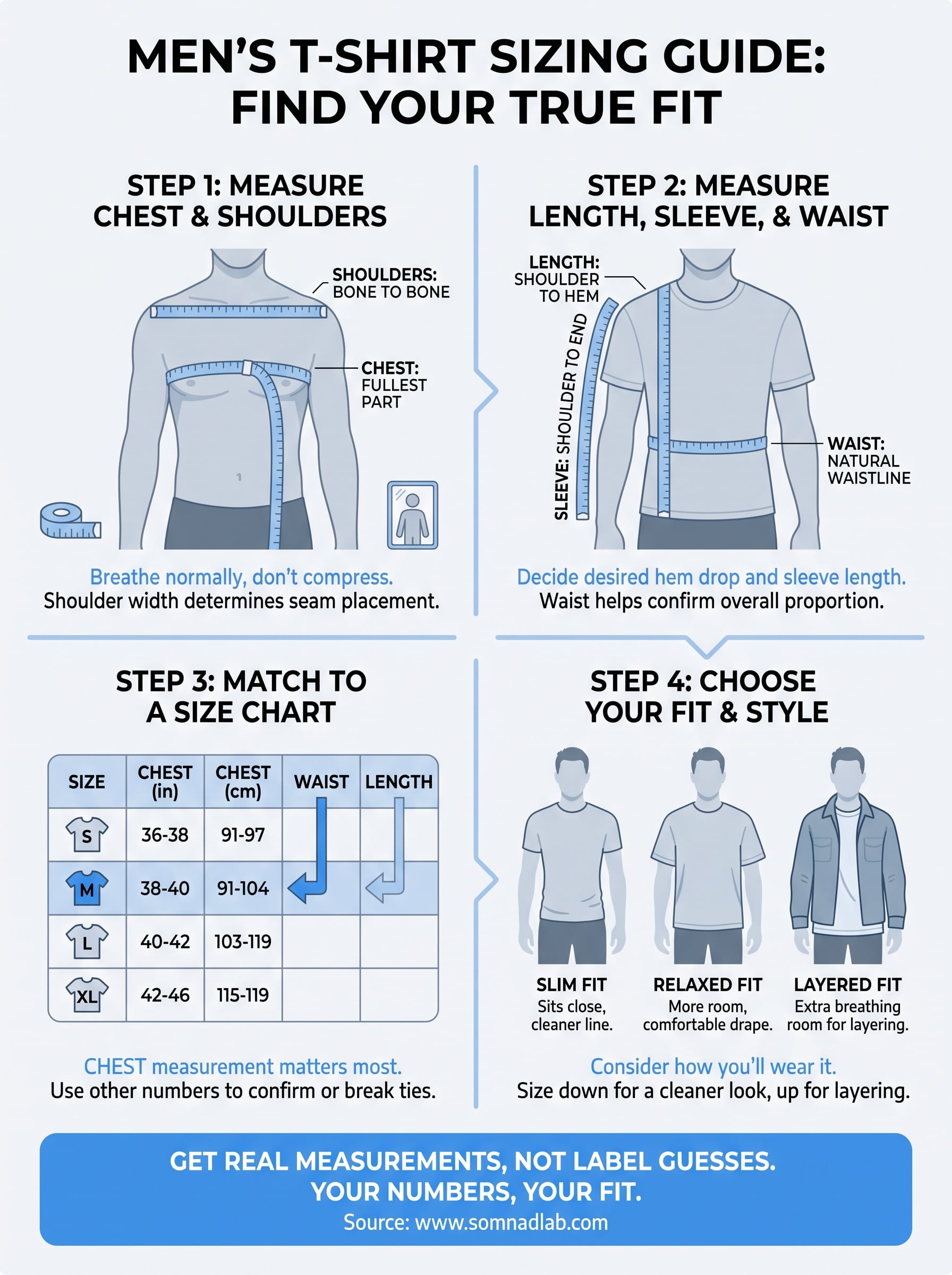
Wrap the tape measure around the fullest part of your chest, usually right under your armpits and across your shoulder blades. Keep the tape parallel to the floor and snug against your body, but don't pull it tight enough to compress your chest. Breathe normally and take the reading after a normal exhale, not after puffing up, since that's how the shirt will actually sit on you day to day.
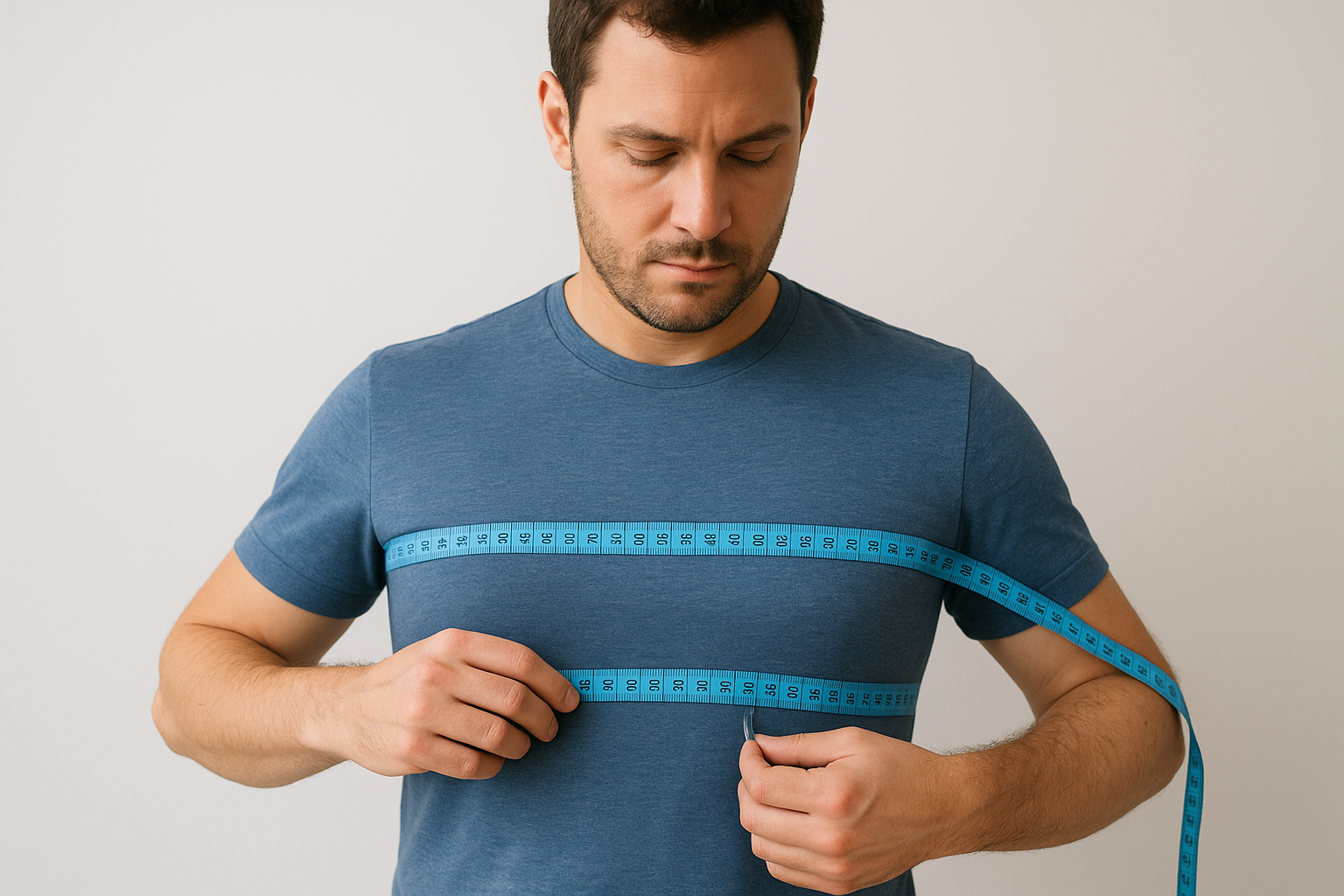
Next, measure your shoulders by placing the tape at the edge of one shoulder bone and running it straight across your back to the edge of the other. This number tells you where the seam should sit, and it matters more than most people realize because a seam that falls past your shoulder makes even a correctly sized chest look sloppy.
Get your shoulder measurement wrong and no amount of chest room will save the fit.
Write both numbers down before moving on. If you're between two chest measurements, lean toward the larger one only if you plan to layer; otherwise the smaller size usually gives you the cleaner line SÖMNAD's relaxed tee is built around.
Step 2. Measure your length, sleeve, and waist
Start your length measurement at the highest point of your shoulder, right where the seam sits, and run the tape straight down to where you want the hem to fall. A shirt that stops mid-hip reads as sloppy no matter how good the chest fit is, so decide now whether you like a slightly cropped hem or one that covers your waistband completely.
Move to the sleeve next. Measure from that same shoulder point down to wherever you want the sleeve to end, whether that's a short cap sleeve or something closer to your elbow. Most everyday tees fall between 8 and 9 inches here, but taller guys often need an inch more to avoid a sleeve that pinches.
A tee that fits your chest but hits the wrong length still looks wrong in every photo.
Finally, wrap the tape around your natural waist, just above your belly button, keeping it level all the way around. Write this number down alongside your chest and shoulder figures. Together, these four measurements are what any accurate t shirt size chart men explained properly should ask you for.
Step 3. Match your measurements to a size chart
Now take those four numbers and line them up against a real chart, like the SÖMNAD size chart, not the vague S/M/L guess most brands print on a tag. Chest measurement matters most, so start there and let the other numbers confirm you're in the right row.
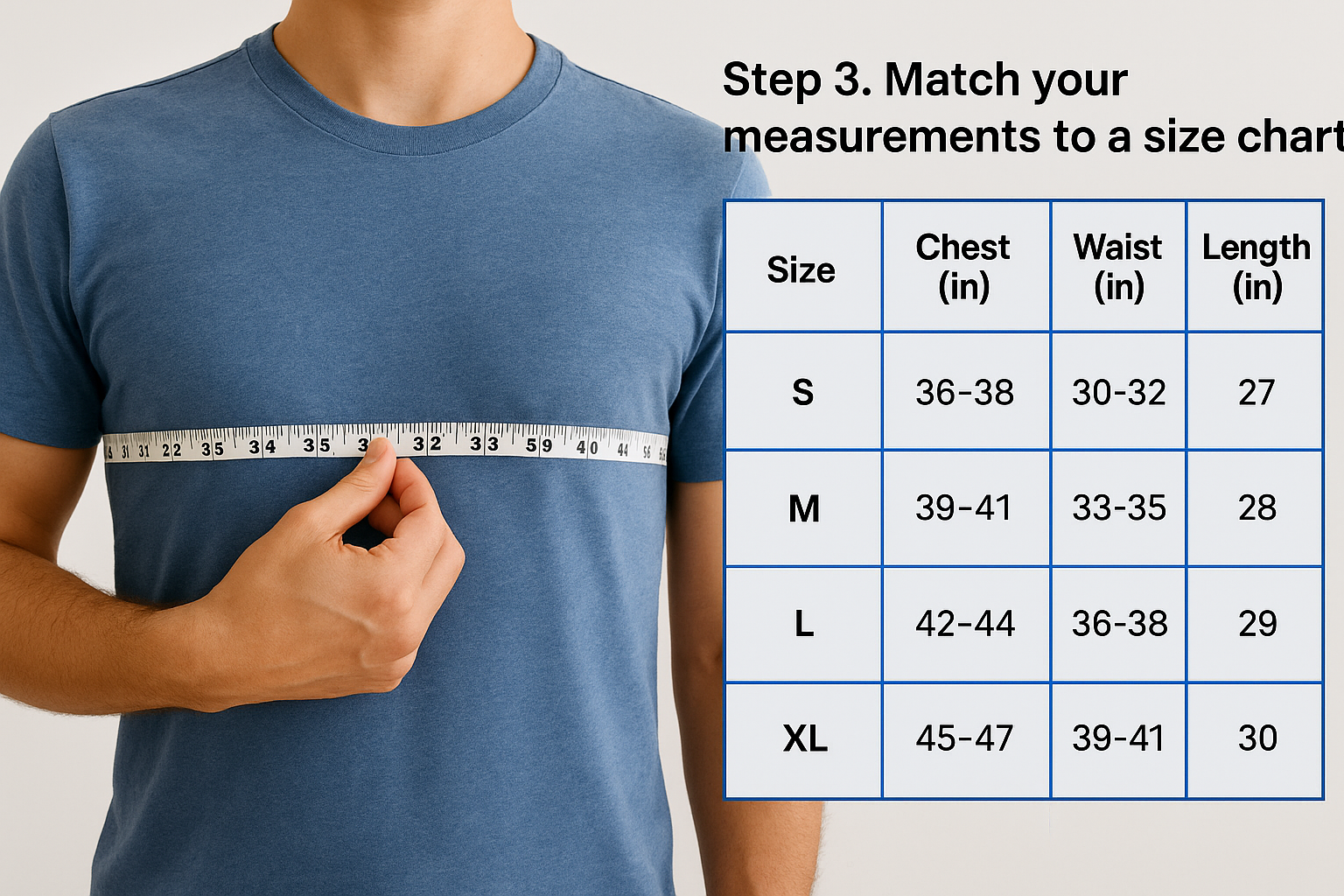
| Size | Chest (in) | Chest (cm) | Waist (in) | Length (in) |
|---|---|---|---|---|
| S | 36-38 | 91-97 | 30-32 | 27 |
| M | 39-41 | 99-104 | 33-35 | 28 |
| L | 42-44 | 107-112 | 36-38 | 29 |
| XL | 45-47 | 114-119 | 39-41 | 30 |
Find your chest number first, then check that your waist and length fall in a reasonable range for that same row. If your numbers straddle two sizes, your shoulder measurement from Step 1 usually breaks the tie, since a shirt that's wide enough in the chest but too narrow in the shoulders will always feel off.
Your chest measurement picks the row, but your shoulder width decides if you actually belong there.
This is the same logic behind any solid t shirt size chart men explained correctly, four numbers working together, not one guess from a label.
Step 4. Choose the right fit for your body and style
Numbers off a chart only get you to the right size, not the right fit, and that's a different decision. Slim builds usually look better in a shirt that sits close to the shoulder seam with minimal extra fabric at the waist, while broader or more athletic builds often need the next size up in chest room even if the length runs slightly long, which is where knowing how a relaxed fit differs from a regular fit helps. Decide first how you want the shirt to sit before you lock in a size.
Consider how you'll actually wear the tee day to day. Tees built for layering under sweaters and jackets call for a size that gives your chest measurement an extra inch of breathing room, while wearing it solo calls for something closer to your true numbers so the fabric doesn't bunch. Heavier fabric, like the 300g Supima cotton in our relaxed tee, holds its shape better at a closer fit than a lightweight cotton blend ever will, since it won't sag or stretch out by midday, and it's worth seeing how 210gsm and 300gsm tees compare before you decide.
The right size gets you in the door, but the right fit is what makes the shirt disappear on your body.
When in doubt, size down for a cleaner line and size up only if you genuinely plan to layer.
Getting your fit right every time
Once you've measured chest, shoulders, length, and waist, you're no longer guessing between S, M, and L based on a label that means nothing across brands. Real measurements beat marketing every time, and now you've got them written down for the next purchase too, not just this one.
Remember that a size chart only gets you into the right range. Your own preference for fit, slim through the chest or roomy enough to layer, is what turns a correctly sized tee into one you actually reach for every week. Keep your numbers handy, since they won't change much year to year, and you'll never have to relearn this process from scratch.
If you want to put these measurements to work right now, check your numbers against the Supima Relaxed Tee, built from Supima cotton to hold its fit wash after wash.