


Most men buy shorts the same way they buy tees: grab a size, try it on, hope for the best. Then they end up with something that either bunches at the knee or rides up like gym shorts from middle school. If you've ever stood in front of a mirror wondering how should men's shorts fit, you're not alone, and the fix is simpler than most style guides make it sound.
The short answer: shorts should sit at your natural waist, hug your thighs without squeezing, and end somewhere between one and three inches above the knee depending on your height and the occasion. Get the inseam length right and the rest of the outfit reads as intentional instead of accidental.
We'll walk through the specifics here, covering waist fit, thigh room, and the length rules that actually hold up across body types. At SÖMNAD, we think about fit the same way we think about fabric: no excess, nothing sloppy, built to hold its shape wear after wear. The same logic applies whether you're picking one of the best t-shirts for men or a pair of shorts.
Why the right fit actually matters
Fit does more work than fabric, color, or price tag when it comes to how an outfit reads. A $200 pair of shorts in the wrong size still looks cheap, while a well-cut $60 pair looks expensive because the lines fall the way they should, the same reason expensive t-shirts feel better on the body than their price alone suggests. That's the whole game with men's shorts fit: it's not about the label, it's about whether the silhouette looks intentional or accidental.
The right fit makes an outfit look expensive; the wrong fit makes anything look cheap.
Consider what happens when the details are off. Shorts that are too tight around the thigh pull at the seams and create horizontal creases that scream "one size too small." Shorts that hang past the knee shorten your legs visually and read as sloppy, even on guys with great taste otherwise. Neither mistake has anything to do with the shorts themselves; it's entirely about how they sit on your body.
Common fit mistakes and what they signal
Here's how the most frequent errors show up and what they communicate before you've said a word:
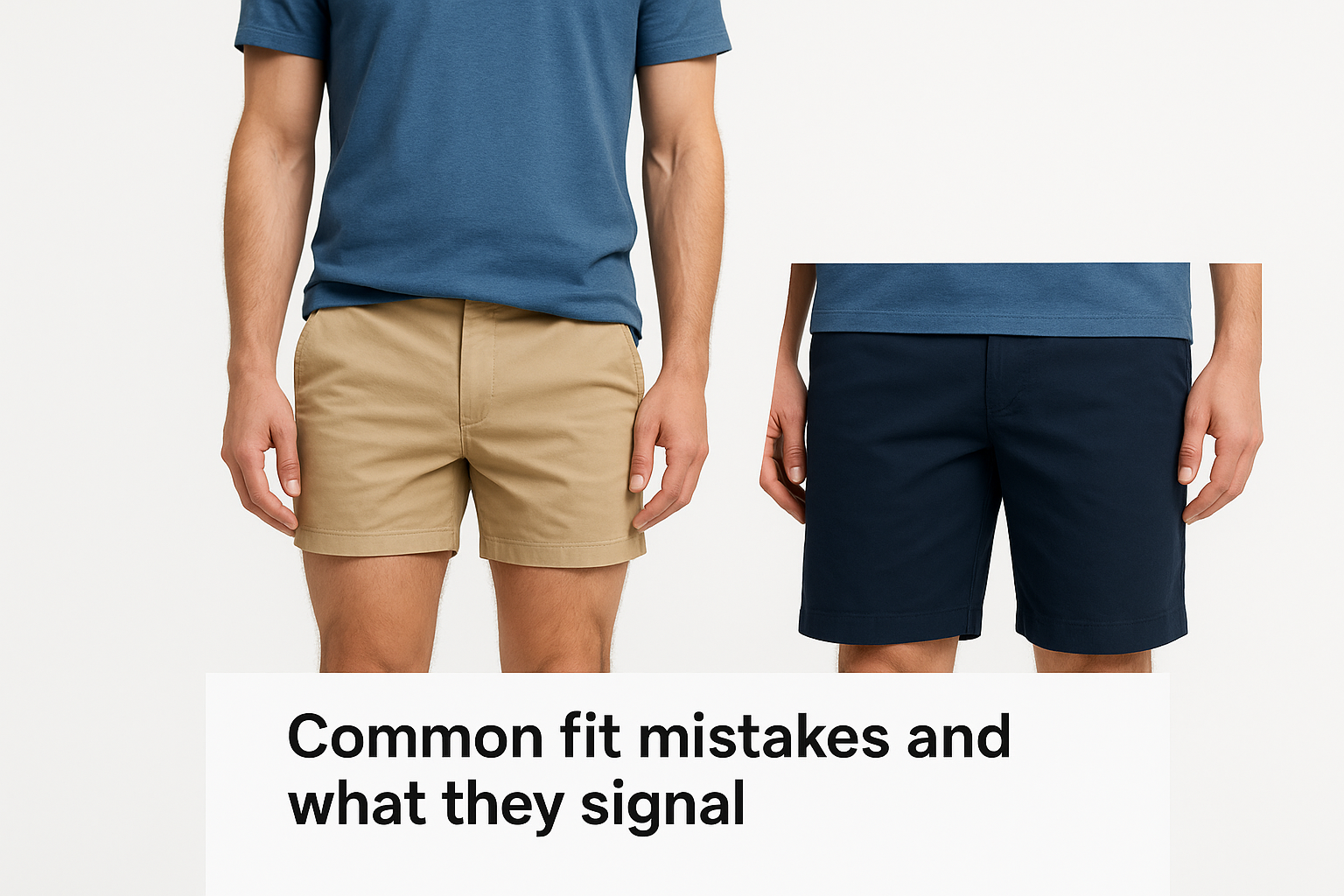
| Fit issue | Visual effect | What it signals |
|---|---|---|
| Too short (mid-thigh) | Legs look shorter, overly casual | Trying too hard or dressed for the beach |
| Too long (past knee) | Silhouette looks bulky, dated | Not paying attention to modern proportions |
| Waist too loose | Bunching, needs a belt to stay up | Wrong size, not tailored to you |
| Thighs too tight | Fabric pulls, visible seams | Bought based on waist size alone |
| Rise too low | Shirt untucks, shows too much | Ill-fitting across the board |
Getting even one of these wrong throws off the whole look, no matter how good the fabric is.
Beyond appearance, proper fit affects how you actually move through your day. Shorts that pinch at the thigh when you sit down or ride up when you walk aren't just unflattering, they're uncomfortable enough that you'll notice it by hour three. Comfort and looking sharp aren't competing goals here; they come from the same source, which is a garment cut to match your actual proportions instead of a generic size chart.
Going forward, treat fit as the first decision, not an afterthought you fix with a belt or a tailor after the fact. Once you understand where shorts should sit and end on your specific body, choosing the right pair gets a lot faster and the guesswork disappears.
How to find your ideal shorts length and inseam
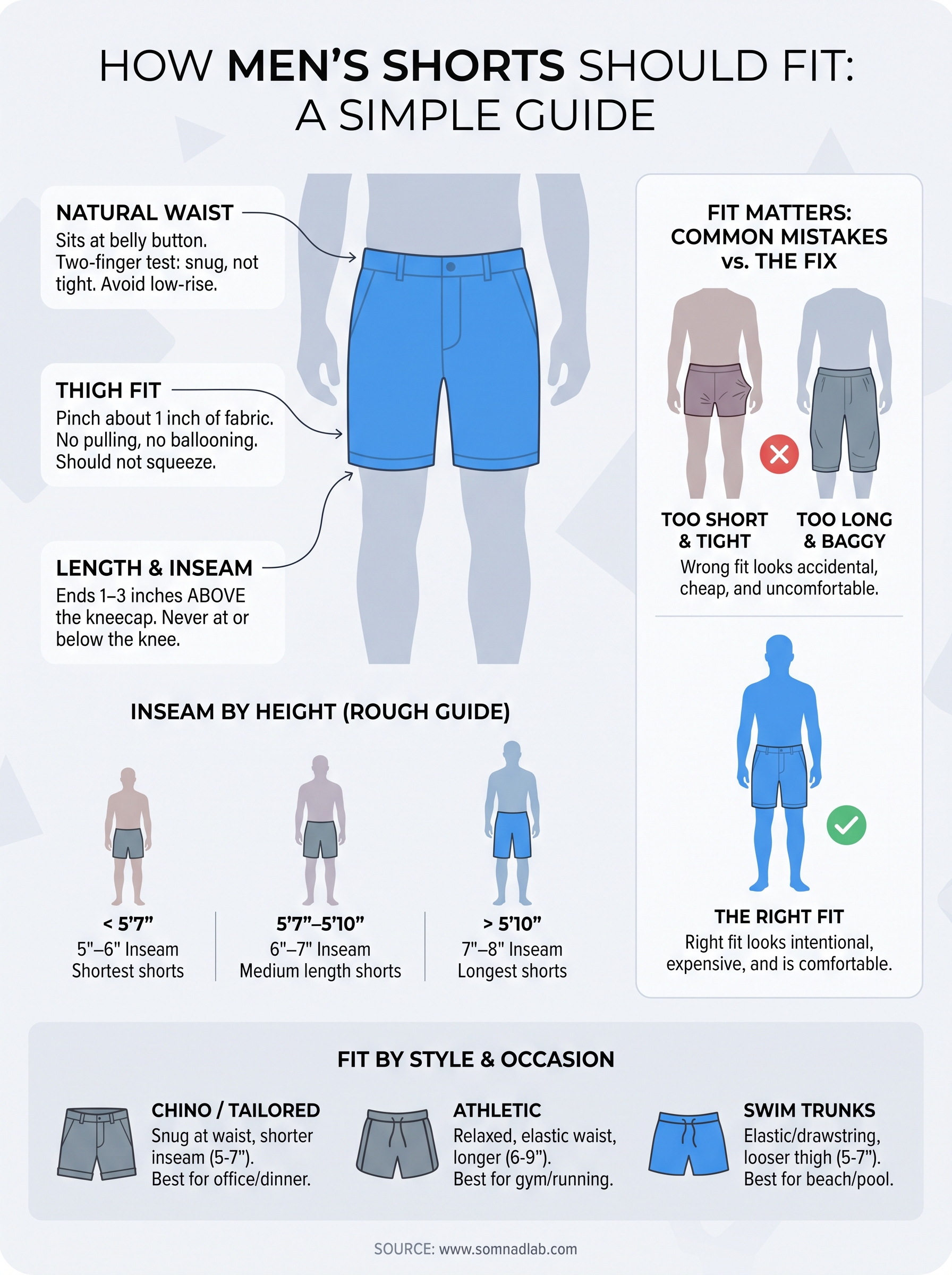
Length is the first thing anyone notices, so it's worth getting exact instead of eyeballing it in a dressing room mirror. The general rule: shorts should end somewhere between one and three inches above the top of your kneecap. Go shorter than that and you're in beach or gym territory. Go longer and you lose the leg-lengthening effect that makes shorts look deliberate rather than like cut-off pants.
Height changes where in that range you should land. Shorter men usually look best closer to the one-inch mark, since more leg showing balances out a shorter frame. Taller men can go closer to three inches without looking undone, and it actually helps proportion on a longer torso.
Shorts should end one to three inches above the knee, never at it or below it.
Inseam length is just the technical term for that same measurement, and it's what you'll see listed on every product page. Here's a rough guide by height:
- Under 5'7": look for a 5" to 6" inseam
- 5'7" to 5'10": aim for a 6" to 7" inseam
- Over 5'10": a 7" to 8" inseam usually reads best
These aren't hard rules, more like starting points. Leg shape matters too. Guys with more muscular thighs sometimes need a slightly longer inseam so the shorts don't flare out awkwardly at the hem.
Once you know your ideal inseam, checking it against a specific pair takes seconds. Most brands list the measurement right in the product description, so shorts length stops being a guessing game and becomes something you can compare across brands the same way you'd compare a shirt's sleeve length.
How to dial in the waist, rise, and thigh fit
Waist fit is where most guys get sloppy, because it's easy to size based on your regular pants and call it done. The waist fit should sit at your natural waist, meaning right around your belly button, not dropped down onto your hips like low-rise jeans from a decade ago. Use the two-finger test: if you can slide two fingers comfortably under the waistband without straining the button, you've got the right size. Any tighter and you'll notice it after a big lunch; any looser and you're reaching for a belt just to keep them up.
If you need a belt to keep your shorts up, they're the wrong size, not a styling accessory.
Rise matters just as much, even though almost nobody talks about it. A mid-rise sits close to the natural waist and works for most builds, while a low-rise drops an inch or two below and tends to look dated outside of athletic shorts. Check the rise against your torso length before you check anything else, since a mismatched rise throws off how the waist and inseam both look once you're standing up.
Thigh room finishes the picture. Grab a handful of fabric at the widest part of your thigh; you want enough room to pinch about an inch of material without it ballooning out. Less than that and you'll see horizontal pull lines when you walk. More than that and the leg opening flares, which reads as ill-fitting even if the waist and length are dialed in perfectly. Get all three, waist, rise, and thigh, working together and the shorts stop needing any adjustment at all.
Fit guidelines by shorts style and occasion
Not every pair of shorts should fit the same way, since the occasion changes what "right" looks like. Tailored shorts for a dinner or office-casual setting call for a closer cut through the thigh and a longer inseam, while athletic shorts need extra room to move and can sit shorter without looking off. Treating every pair like it needs the same fit is where a lot of guys go wrong, even after they've nailed the basics of waist and length.
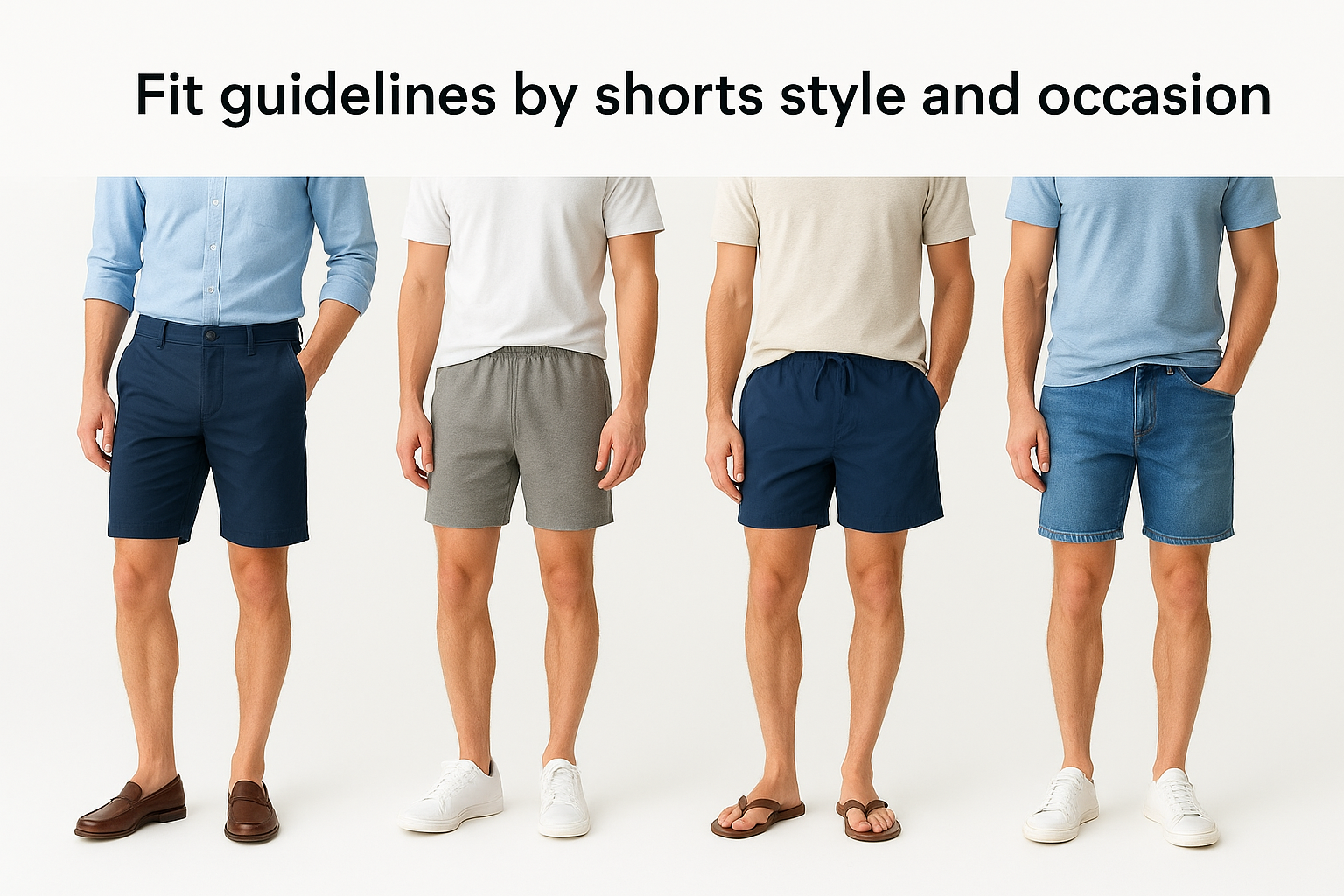
Swim trunks and lyocell-linen drawstring shorts are the exception to almost every rule above. Elastic waistbands mean the two-finger test doesn't apply the same way, and a slightly looser thigh is fine since wet fabric clings differently than dry cotton or linen. Chino shorts, on the other hand, should follow the strict rules: natural waist, one to two inches of thigh room, and an inseam on the shorter end since they're meant to look put-together, not baggy.
Match the fit to the occasion, not just your body, and the outfit reads as intentional every time.
Here's how the guidelines shift by category:
| Style | Ideal inseam | Waist fit | Best occasion |
|---|---|---|---|
| Chino/tailored shorts | 5" to 7" | Snug at natural waist | Office-casual, dinner |
| Athletic shorts | 6" to 9" | Elastic, relaxed | Gym, running |
| Swim trunks | 5" to 7" | Elastic or drawstring | Beach, pool |
| Denim shorts | 6" to 8" | Fitted, no gap | Weekend, casual outings |
Once you know which category you're dressing for, apply the length and thigh rules from earlier as a starting point, then adjust based on the fabric's structure. Stiffer materials like chino hold their shape and can run slightly looser; softer knits need a closer cut to avoid looking shapeless by the end of the day, and a few simple fabric and stitch tests will tell you which one you're holding.
Getting the fit right, once and for all
Fit isn't complicated once you know the three checkpoints: waist at your natural line, thigh with just enough room to pinch an inch, and an inseam that lands one to three inches above the knee. Skip any of those and even expensive shorts start looking careless. Getting shorts to fit right the first time saves you the trip to a tailor and the awkward mirror check before you leave the house.
None of this changes by trend or season, which is exactly why it's worth learning once and applying every time you shop. Once you've got your ideal inseam and waist measurement written down, comparing pairs across brands takes seconds instead of guesswork.
Quality construction makes the fit hold up wash after wash, which is the same standard we apply to everything we build. If you're ready to put these numbers to use, browse SÖMNAD's shorts collection and see the difference a proper cut makes.