


You've probably said it yourself: "I just need better basics." Your closet is full of tees that pill after three washes, tops that lose their shape by noon, and layering pieces that never quite fit right. That gap between cheap fast fashion and overpriced logo-driven brands is exactly where elevated basics live, and once you understand what separates them from the rest, you stop settling.
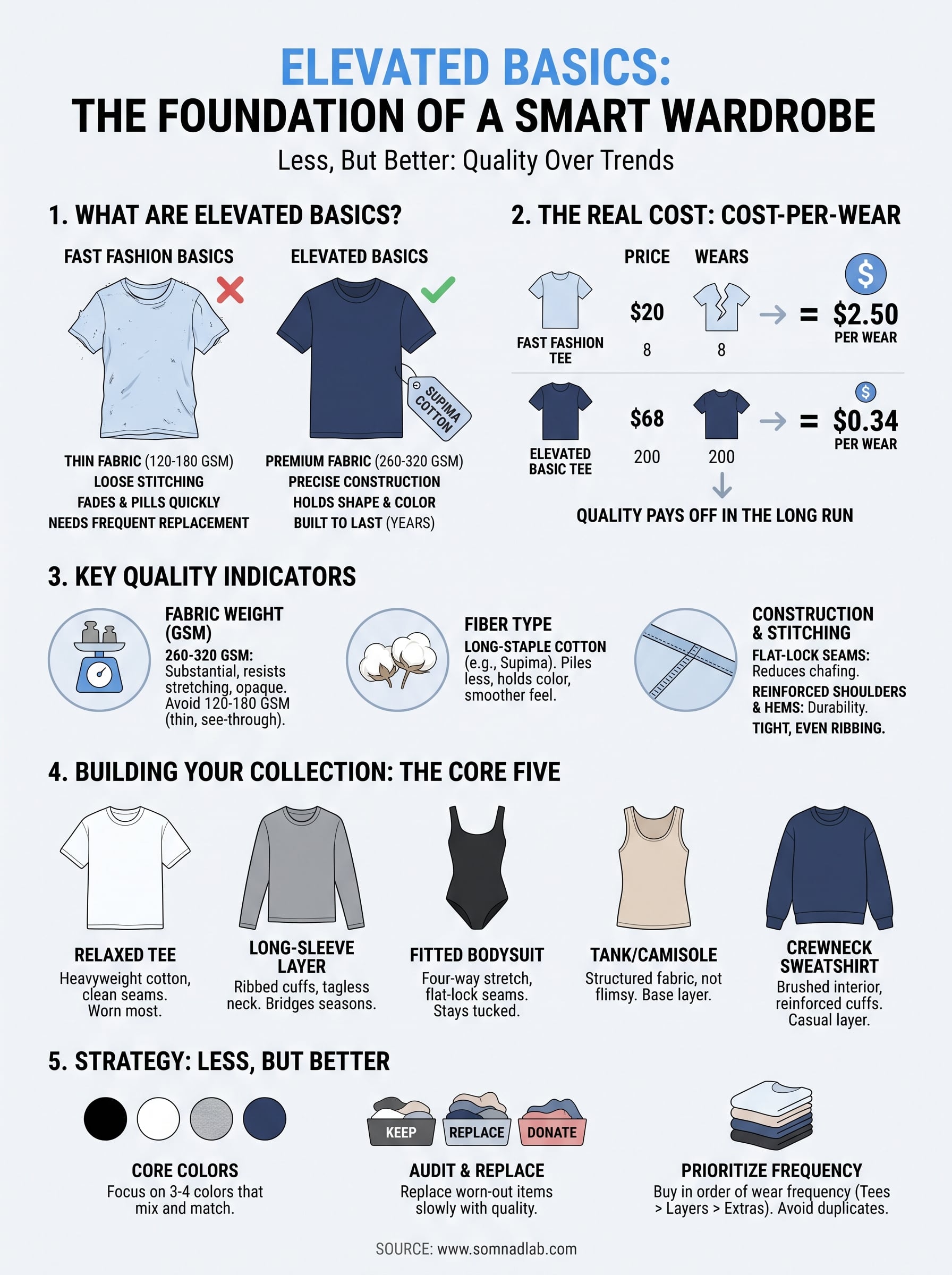
Elevated basics are wardrobe staples, think tees, tops, and bodysuits, built with premium fabrics and precise construction instead of trends or branding. The difference shows up in how a piece drapes, how it holds up after fifty washes, and how it layers under a jacket without bunching. A relaxed tee made from heavyweight Supima cotton isn't just softer, it's cut and finished to actually last.
This article breaks down what qualifies as an elevated basic, why fabric weight and construction matter more than logos, and how to build a minimalist wardrobe around a handful of pieces that work every season. You'll walk away knowing exactly what to look for, and what to skip, next time you shop.
Why elevated basics matter for your wardrobe
Basics make up most of what you actually wear week to week, not the statement pieces sitting in the back of your closet. A tee shows up in more outfits than a printed blazer ever will, so when that tee is thin, shapeless, or covered in a logo, it drags down everything you pair it with. Elevated basics flip that math: the pieces you reach for most often become the ones doing the most work, both in comfort and in how put-together you look without trying.
The real cost of cheap basics
Fast-fashion tees look fine in the store and fall apart within a season. Thin knits pill, necklines stretch out, and colors fade after a handful of washes, which means you're back at the store buying replacements every few months. Cheap basics create a cycle where you spend more over a year than you would on one well-made piece, and you end up with a drawer full of tees that don't quite fit right anymore. That churn also means more fabric waste, more shipping, more packaging, all for clothing that never had a chance to last.
A tee you replace four times a year costs more, in money and hassle, than one tee that lasts four years.
Cost-per-wear beats the price tag
Looking at price alone hides the real comparison. A $20 tee that looks worn out after eight wears costs you $2.50 per wear. A $68 tee made from heavyweight Supima cotton that holds its shape for 200 wears costs $0.34 per wear. That math is the logic behind investing in quality wardrobe staples instead of restocking cheap ones every few months.
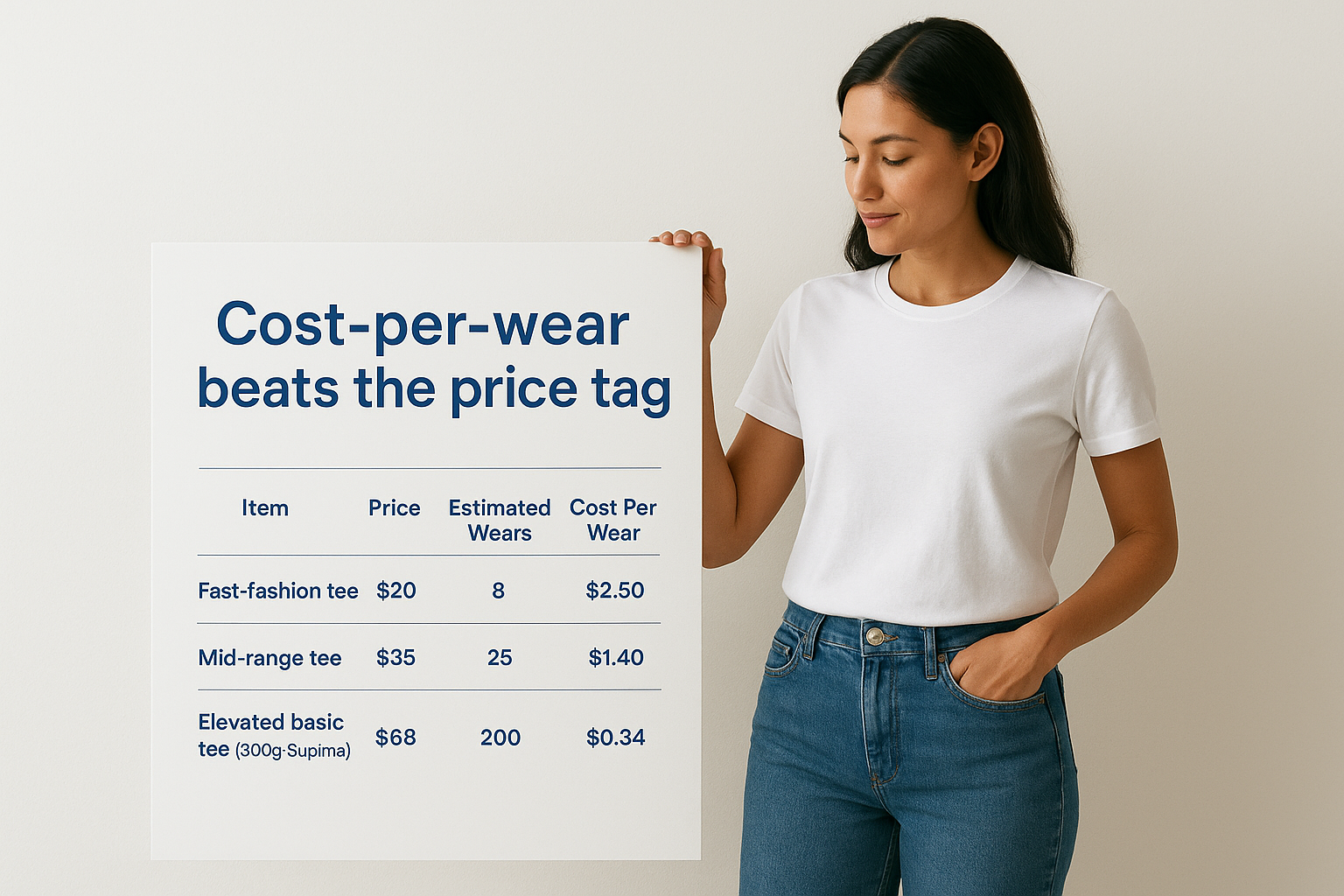
| Item | Price | Estimated Wears | Cost Per Wear |
|---|---|---|---|
| Fast-fashion tee | $20 | 8 | $2.50 |
| Mid-range tee | $35 | 25 | $1.40 |
| Elevated basic tee (300g Supima cotton) | $68 | 200 | $0.34 |
Numbers like these change how you shop. Once you start tracking cost-per-wear, buying fewer, better tees stops feeling indulgent and starts feeling practical.
How elevated basics support a minimalist wardrobe
Simplifying your closet only works if the pieces you keep can handle daily rotation without breaking down. Minimalist style depends on fewer items doing more, and that only holds up when those items are built from fabric heavy enough to hold structure and stitching tight enough to survive a dryer cycle. Everyday essentials like a well-cut tee or bodysuit become the base layer for nearly every outfit, so their fit and drape matter more than any single statement piece in your closet.
Understated clothing also solves a styling problem fast fashion creates: matching. When your basics are cut consistently and made from fabric that holds color and shape, they layer under jackets, tuck into trousers, and pair with anything else in your closet without looking mismatched or dated. That consistency is what lets you build outfits in under a minute instead of second-guessing every combination in your closet.
How to build a wardrobe of elevated basics
Building a wardrobe of elevated basics isn't about buying everything at once. It's a slow swap: every time a cheap tee or top wears out, you replace it with a piece built to last instead of another quick fix. Start with the items you wear most, usually tees, tanks, and a couple of long-sleeve layers, and treat those as your foundation before touching anything else.
Start with a core color palette
Pick three or four colors that work with everything already in your closet, typically black, white, heather gray, and one neutral like sand or navy. A tight color palette means every new piece you add mixes and matches with what you own, so you're not accidentally building a closet full of orphaned items that only pair with one outfit. This is the backbone of a true capsule wardrobe: fewer colors, more combinations.
Audit before you buy
Go through your current basics and sort them into three piles: keep, replace, and donate. Anything pilling, stretched out, or thinned from wear goes in the replace pile. This step stops you from duplicating what already works and shows you exactly where your money should go first.
- Keep: pieces that still hold shape and color
- Replace: pieces that pill, sag, or fade
- Donate: pieces you never reach for
Buy less, choose well
Once you know what you actually need, resist the urge to order five variations of the same tee in one sitting. Two or three well-made tees in your core colors outperform a drawer full of mediocre ones, both in how often you wear them and how long they last.
A wardrobe built on ten quality pieces beats one built on thirty forgettable ones.
Quality wardrobe staples cost more upfront, so spacing out purchases over a few months keeps the transition affordable while still moving you away from fast fashion for good. Track what you're replacing and why, since that habit keeps you from falling back into the cycle of buying cheap and replacing often.
What to look for in fabric and construction quality
Quality in elevated basics isn't something you can judge from a product photo. It comes down to fabric weight, fiber type, and how a garment is actually sewn together, details most fast-fashion brands never mention because they don't hold up to scrutiny. Knowing what to check before you buy saves you from another tee that looks fine online and falls apart in the wash.
Fabric weight and fiber type
GSM, or grams per square meter, tells you how dense a fabric is, and it's the single best predictor of how a tee will hold up over time. Fast-fashion tees usually sit around 150 to 180 GSM, thin enough to see through under bright light. Heavyweight fabric in the 260 to 320 GSM range feels substantial, resists stretching, and drapes instead of clinging. Fiber matters just as much: long-staple cotton varieties like Supima, which the Supima organization certifies for length and strength, produce yarns that pill less and hold color longer than standard upland cotton.
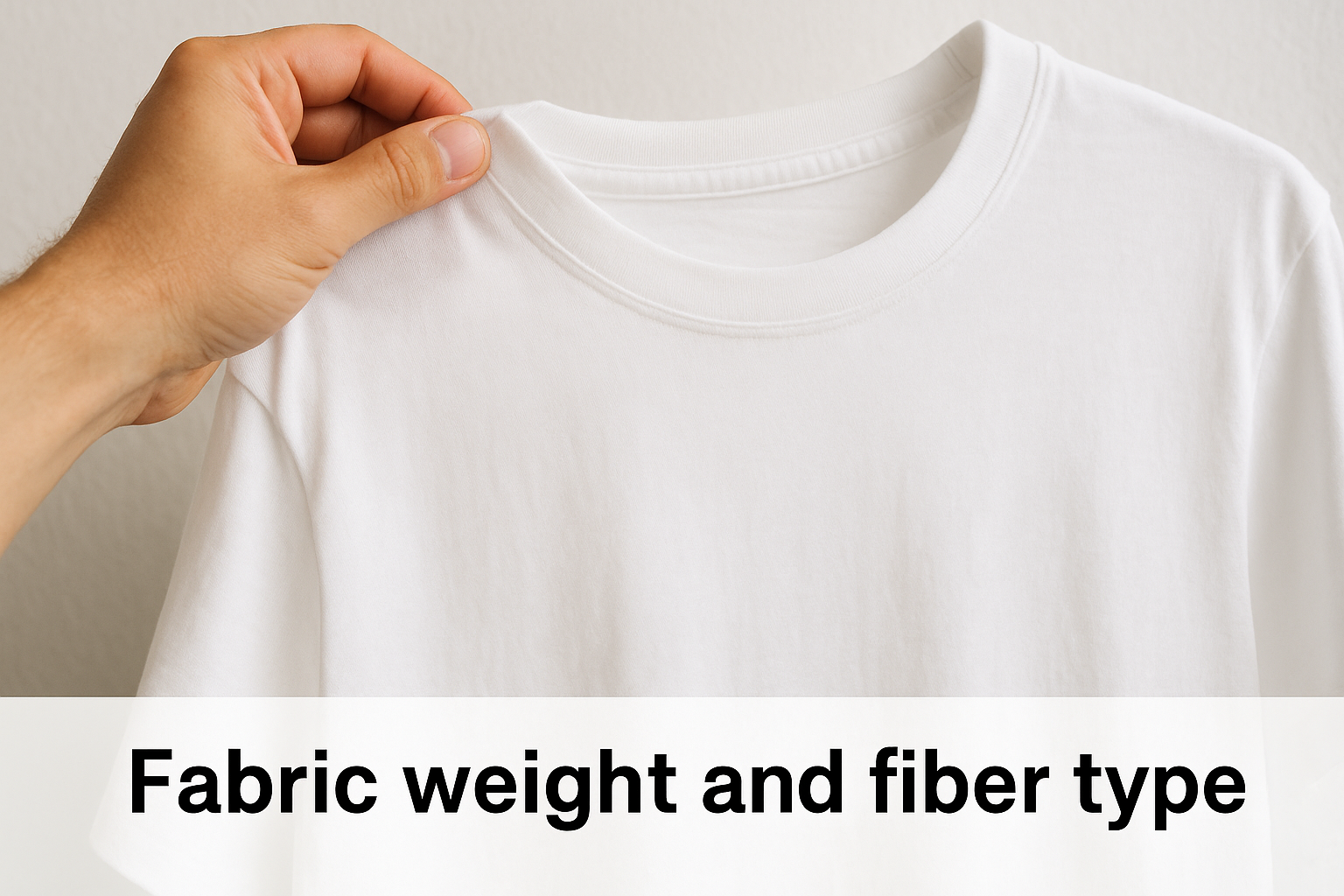
| Fabric Weight (GSM) | Feel | Typical Use |
|---|---|---|
| 120-180 | Thin, see-through | Fast-fashion tees |
| 180-220 | Mid-weight | Everyday basics |
| 260-320 | Substantial, structured | Elevated basics |
If you can see your hand through a tee held up to the light, the fabric is too light to last.
Stitching and seam construction
Flip any garment inside out before buying it, or check close-up photos if you're shopping online. Clean, tight seam construction with reinforced shoulders and double-stitched hems signals a piece built to survive repeated washing. Loose threads, single-stitched seams, or uneven hems are early warning signs that a garment will unravel within a few months, no matter how nice the fabric feels on the hanger.
Signs of durability you can check before buying
Beyond weight and stitching, a few quick checks tell you a lot about construction quality before you commit to a purchase:
- Stretch the fabric gently, it should snap back without sagging
- Check the ribbing on collars and cuffs for tight, even knitting
- Look for flat-lock seams that won't rub or chafe under layers
- Confirm colorfast dyeing by checking for consistent tone across panels
Garments that pass these checks are the ones that still look sharp after fifty washes, not five.
Essential pieces to start your elevated basics collection
You don't need thirty items to build a wardrobe that works. A handful of well-made pieces, worn on repeat, does more for your everyday style than a closet stuffed with cheap options you barely touch. Start with the pieces that touch your skin the most and layer under everything else, then build outward from there.
The core five
Focus on wardrobe essentials that pull double duty across seasons and occasions. These five pieces form the base of almost any outfit, whether you're dressing for work, weekends, or travel.
| Piece | Why it earns a spot | What to prioritize |
|---|---|---|
| Relaxed tee | Works alone or under layers | Heavyweight cotton, clean seams |
| Long-sleeve layer | Bridges seasons | Ribbed cuffs, tagless neck |
| Fitted bodysuit | Stays tucked, no bunching | Four-way stretch, flat-lock seams |
| Tank or camisole | Base layer for warmer months | Structured fabric, not flimsy jersey |
| Crewneck sweatshirt | Casual layering piece | Brushed interior, reinforced cuffs |
Each of these should hold its shape after a full day of wear, not just look good for the first hour. A relaxed tee cut from 300g Supima cotton, for example, keeps its structure through repeated washing instead of thinning out after a month, which is exactly why it anchors so many elevated basics collections.
Prioritize by how often you wear it
Buy in the order you actually reach for things, not the order that feels exciting. Tees come first because they're worn most, then layering pieces, then the extras.
- Two to three tees in your core colors
- One long-sleeve layer for cooler days
- One bodysuit if you tuck often
- One sweatshirt or layering piece for casual days
The tee you wear three times a week matters more than the jacket you wear three times a year.
Fill gaps, don't duplicate
Once your core five are covered, resist buying more of what you already have. Instead, look at what's missing from your rotation, maybe a heavier layer for winter or a lighter tank for summer, and fill that gap specifically. This keeps your minimalist wardrobe intentional instead of accidentally cluttered, and it stretches your budget toward pieces that actually expand what you can wear, not just more of the same silhouette in a different color.
Dressing with less, but better
A closet full of elevated basics solves a problem most wardrobes never fix: the gap between what looks good on a hanger and what actually holds up on your body, wash after wash. You don't need thirty pieces competing for attention. You need a handful that fit right, layer well, and last long enough that you stop thinking about replacing them every season.
Start small. Swap one worn-out tee for a heavyweight one. Build your core colors. Check the seams before you check the price tag. That's the whole strategy, and it works because it's built on fabric and construction, not trends.
If you're ready to put that thinking into practice, shop SÖMNAD's collection of relaxed tees and essentials built on exactly this philosophy: less, but better.