


You've seen the number on a product page and paused. A 180 gsm t shirt sounds technical, but it's just a way of measuring how much fabric you're getting per square meter. That single figure tells you a lot about how a tee will drape, hold up in the wash, and feel against your skin, before you ever touch it.
Here's the short answer: 180 gsm sits in the lightweight-to-midweight range. It's thinner than the heavyweight tees built for durability, and it typically means a softer hand feel with more drape and breathability, at the cost of some structure and longevity. If you've worn a tee that felt slightly see-through after a few washes, there's a good chance it was in this range or lighter.
We make our tees at 300 grams for a reason, and this article explains why that gap matters. We'll break down what GSM actually measures, walk through how 180 gsm compares to 150, 220, and heavier weights, and cover what to expect in terms of shape retention, warmth, and wear over time. By the end, you'll know exactly what you're buying before you check out.
Why 180 GSM matters for t-shirt quality
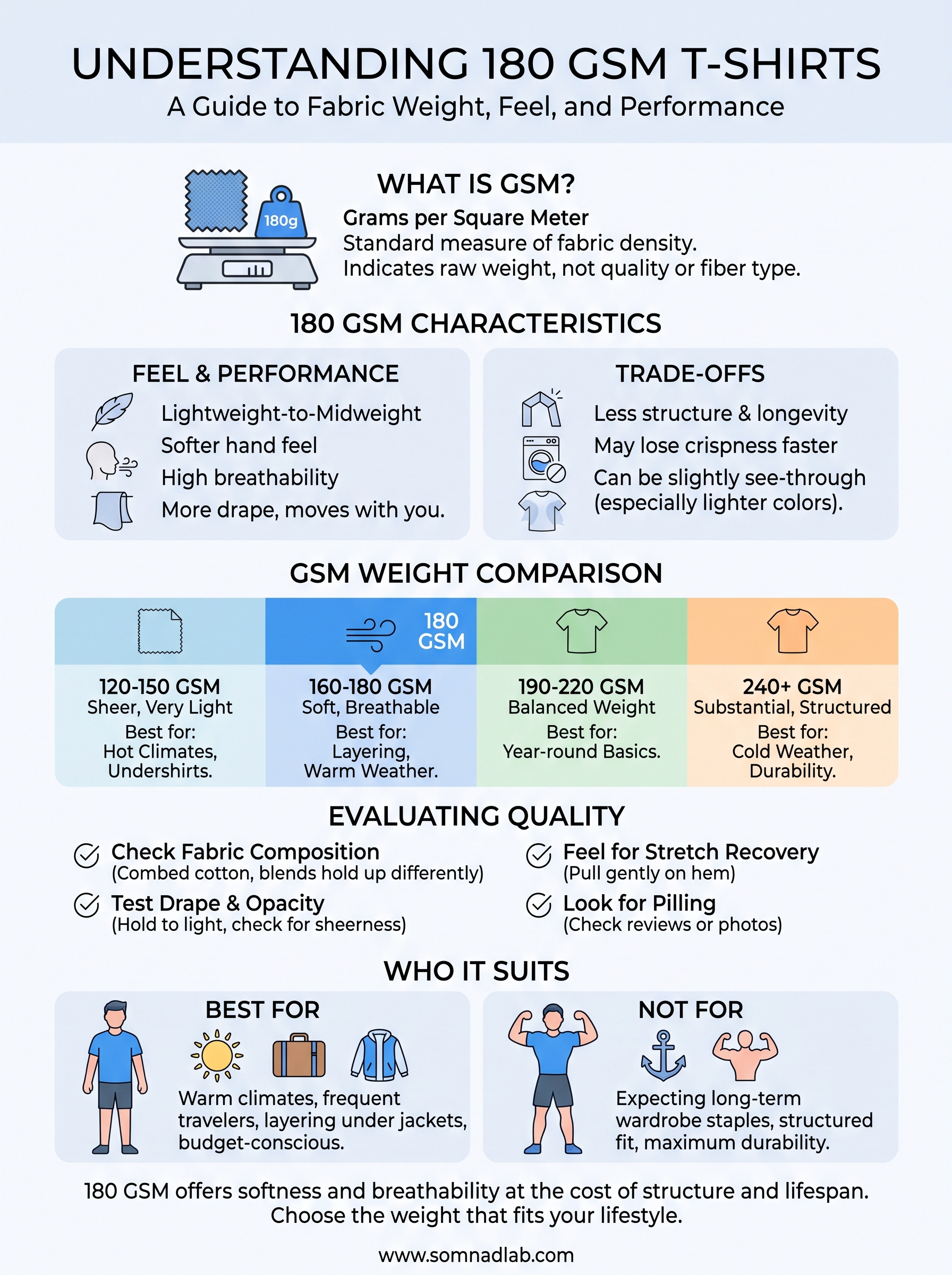
GSM stands for grams per square meter, and it's the standard way the apparel industry measures fabric density. A machine cuts a one-meter square swatch of the material, weighs it, and that number becomes the spec you see on a product page. It's not a measure of thread count or fiber type, just raw weight, which means two 180 gsm shirts can still feel different depending on the cotton used and how it's knitted. Still, the number gives you a reliable starting point for comparing tees before you buy.
What the weight tells you about durability
Lighter fabrics like 180 gsm use less yarn per square inch, so there's less material standing between your skin and the outside world. That translates into a shirt that breathes well and feels airy, but it also means the fibers have less mass to resist stretching, pilling, and thinning out over repeated washes. Fabric density directly affects how a shirt holds its shape after a year of regular wear. A tee at this weight is more likely to lose its crispness around the collar and hem faster than something heavier.
A 180 gsm tee trades long-term structure for everyday lightness.
Opacity and drape at this weight
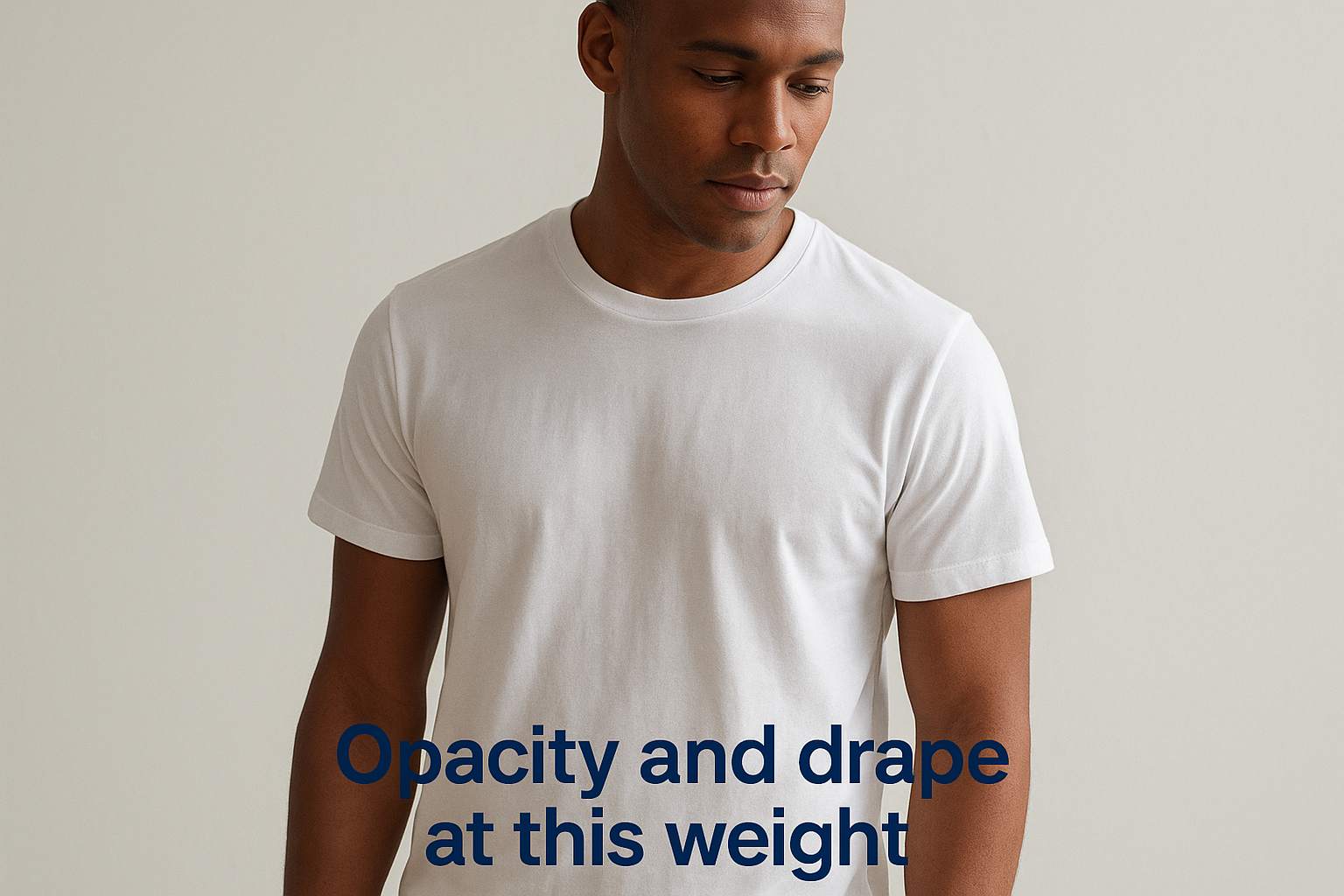
Because there's less yarn packed into the fabric, 180 gsm shirts tend to sit closer to the see-through end of the spectrum, especially in lighter colors or after a hot wash cycle. This is the range where you'll notice fabric drape rather than structure. The shirt moves with you instead of holding its own shape, which some people like for a relaxed, worn-in look right out of the package. Others find it reads as thin or flimsy, particularly next to a shirt built with something like 300g Supima cotton, where the extra weight gives the fabric enough body to hold a clean line without clinging.
Comparing common ranges side by side makes the trade-offs clearer:
| GSM Range | Feel | Best For |
|---|---|---|
| 120-150 | Sheer, very light | Hot climates, undershirts |
| 160-180 | Soft, breathable | Layering, warm weather |
| 190-220 | Balanced weight | Year-round basics |
| 240+ | Substantial, structured | Cold weather, durability |
How to evaluate a 180 GSM t-shirt before buying
Shopping by number alone can mislead you, since GSM only tells part of the story. Fiber quality and knit construction matter just as much as the weight printed on the tag, so you need a quick system for checking a tee before it lands in your cart or your dresser.
Check the fabric composition first
Start by reading the material label, not just the weight. A 180 gsm shirt made from combed cotton or a cotton-poly blend will hold up differently than one spun from cheap open-end yarn, even at the same density. Blends with polyester often feel lighter than pure cotton at the same GSM, which can throw off your expectations if you're comparing across brands.
Test drape and opacity in person
Hold the shirt up to light if you can, or check customer photos if you're buying online. Sheerness under light is the fastest way to spot a tee that will show more skin than you'd like, especially in white or pastel colorways.
Run through this checklist before you buy:
- Hold the fabric to light and check for see-through spots
- Feel for stretch recovery by pulling gently on the hem
- Look for pilling in customer review photos
- Confirm the knit type (jersey, ribbed, interlock)
- Compare the GSM to your existing wardrobe favorites
A quick light test tells you more about a shirt's honesty than the spec sheet ever will.
180 GSM versus other common fabric weights
Numbers only mean something in context, so let's put 180 gsm next to the weights you'll actually run into while shopping. Comparing gsm ranges side by side shows you exactly what you give up and gain as the fabric gets heavier or lighter, and it explains why two shirts at wildly different price points can still both call themselves "premium."
Lightweight tees below 180 gsm
Anything under 160 gsm edges into undershirt territory. These tees are built for heat, layering, or travel, where packability matters more than shape retention. You'll notice thinner fabric almost immediately, both in how the shirt drapes and in how quickly it shows wear at the seams.
Midweight tees from 190 to 220 gsm
This range is where most everyday basics live. A 200 gsm tee holds a cleaner line than 180 gsm without feeling heavy in summer, which is why it's the default choice for brands trying to please a wide range of body types and climates.
Heavyweight tees at 240 gsm and above
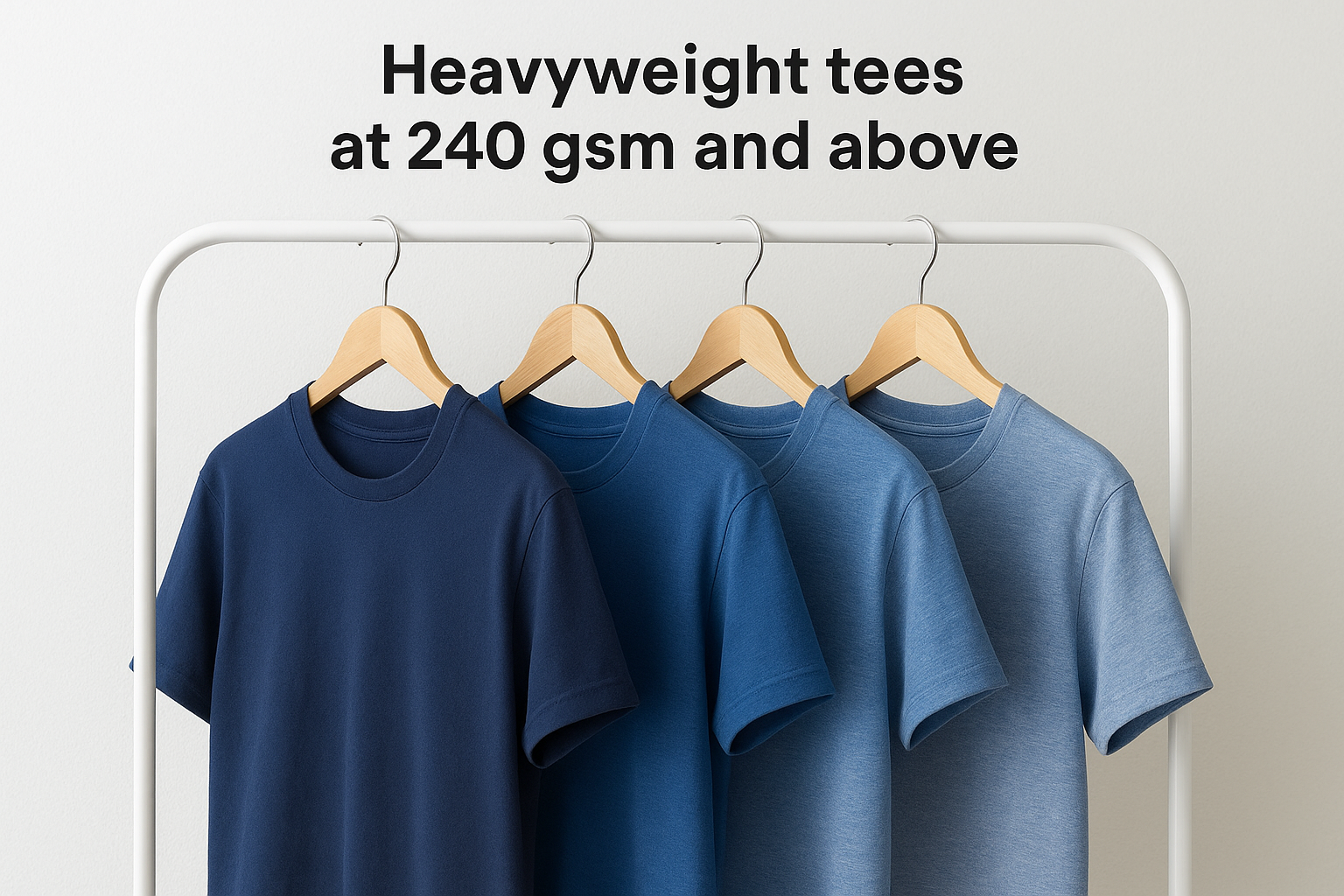
Once you cross 240 gsm, you're in structured, workwear-adjacent territory. Our 300 gsm Supima cotton sits well past this line, chosen specifically for shape retention that survives dozens of wash cycles without thinning at the elbows or collar.
The heavier the fabric, the longer it takes to look tired.
Side by side, the pattern is simple: weight buys you structure and lifespan, while lighter fabric buys you breathability and softness on day one.
Who a 180 GSM t-shirt suits best
Some wardrobes call for lightness, and a 180 gsm t shirt earns its place in those cases. If you live somewhere humid, travel often, or layer under jackets and flannels, this weight gives you breathability without bulk. It's also a fair pick for anyone who prioritizes drape over durability, someone who wants a shirt that moves easily and packs flat in a suitcase, even if that means replacing it sooner than a heavier tee.
Warm climates and frequent layering
Heat changes what you want from fabric. A thinner shirt lets air move across your skin instead of trapping it, which matters more in July than it does in January. Warm weather wear is where 180 gsm actually shines, since the same thinness that hurts durability helps ventilation. Anyone building a layering system, tee under an overshirt or blazer, also benefits from the lower bulk, since a heavier base layer can make everything on top fit awkwardly.
Budget-conscious or short-term wear
Others gravitate to this weight simply because it costs less to produce, and that savings usually gets passed on. If you're stocking up on undershirts, gym basics, or tees you expect to rotate out within a year or two, the trade-off makes sense.
Lightweight fabric rewards climate and convenience, not longevity.
What it doesn't suit is anyone expecting a tee to anchor a wardrobe for years. That's a different set of priorities entirely, and one worth thinking through before you commit to a weight.
Choosing the weight that fits your wardrobe
GSM isn't a quality score, it's a starting point. A 180 gsm t shirt tells you to expect softness, drape, and breathability, with less structure and a shorter lifespan than heavier fabric. That's not a flaw, it's a trade-off, and now you know exactly what you're trading for what.
Match the weight to how you actually live. Frequent flyer or gym regular, lighter fabric earns its keep. Building a wardrobe you don't want to think about for years, heavier construction pays you back every wash. We built our tees at 300 grams of Supima cotton because we wanted the second kind of shirt, one that holds its shape long after a 180 gsm tee would've stretched out and thinned at the seams.
If that sounds like the tee you've been missing, see how our tees are made.