


You've probably noticed the price jump between a $12 tee at a fast fashion store and a $50 one that claims to be Supima cotton. The fabric tag doesn't explain much, and most product pages just repeat the word
Why Supima cotton is worth the investment
"Supima" without ever explaining what separates it from a regular cotton blend. Supima stands for "superior pima," a trademarked designation for extra-long staple cotton grown almost exclusively in the United States and licensed by the Supima organization. The name isn't a marketing flourish. It's a quality guarantee tied to fiber length, and fiber length is the single biggest factor in how a shirt looks, feels, and holds up after fifty washes. When you're comparing a women's supima cotton t-shirt to a standard cotton tee, you're really comparing fiber length, and that difference shows up everywhere from the softness on day one to the shape retention on day two hundred.
Fiber length changes everything
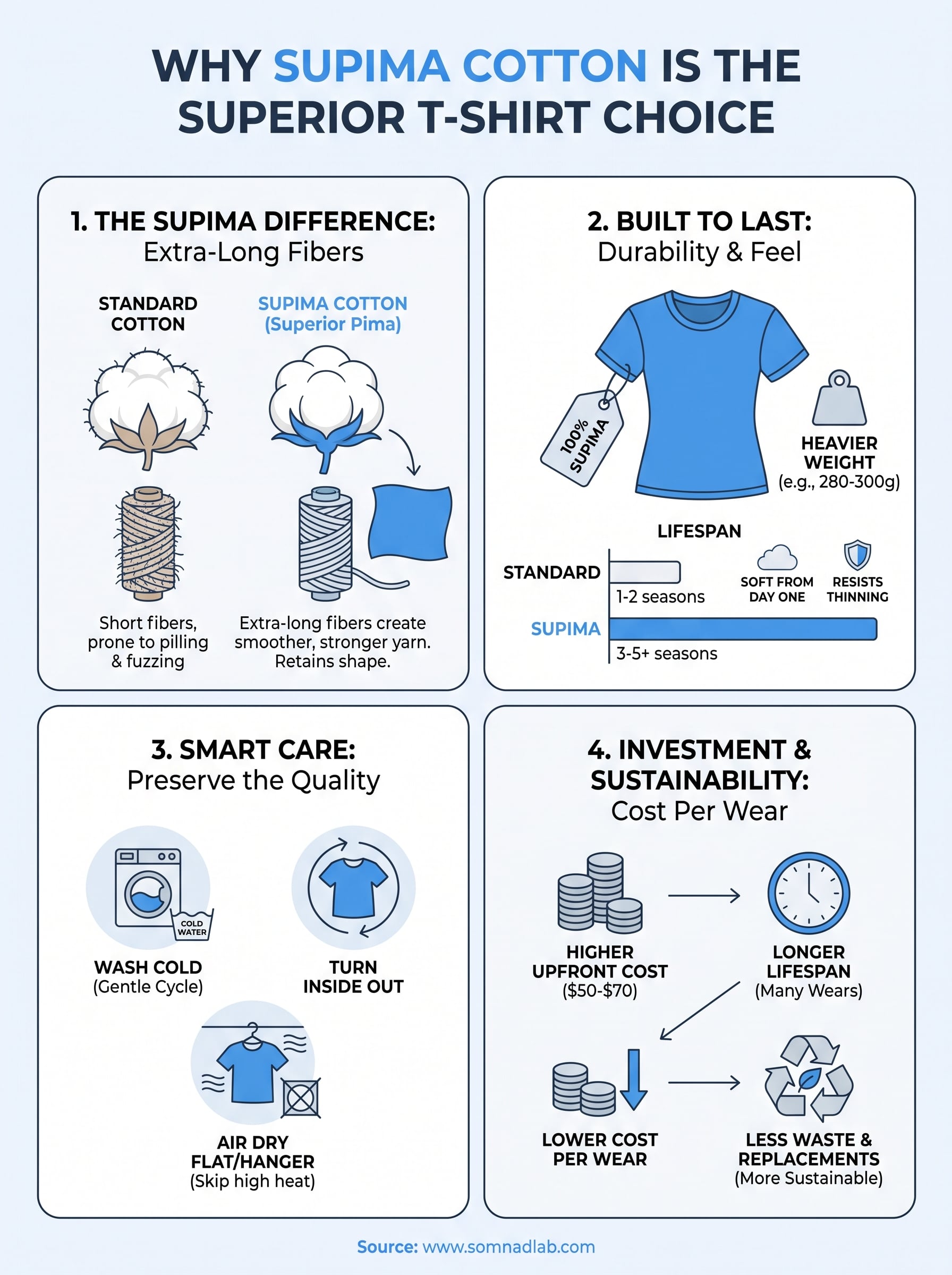
Regular upland cotton, the kind used in most mass-market shirts, has short, coarse fibers. Manufacturers spin those short fibers into yarn, but the process leaves loose ends sticking out, which is why cheap tees pill and fuzz after a few washes. Supima fibers run significantly longer, which lets spinners twist them into smoother, stronger yarn with fewer weak points. Longer fibers mean less breakage during spinning, less pilling during wear, and a fabric surface that stays smooth instead of turning fuzzy.
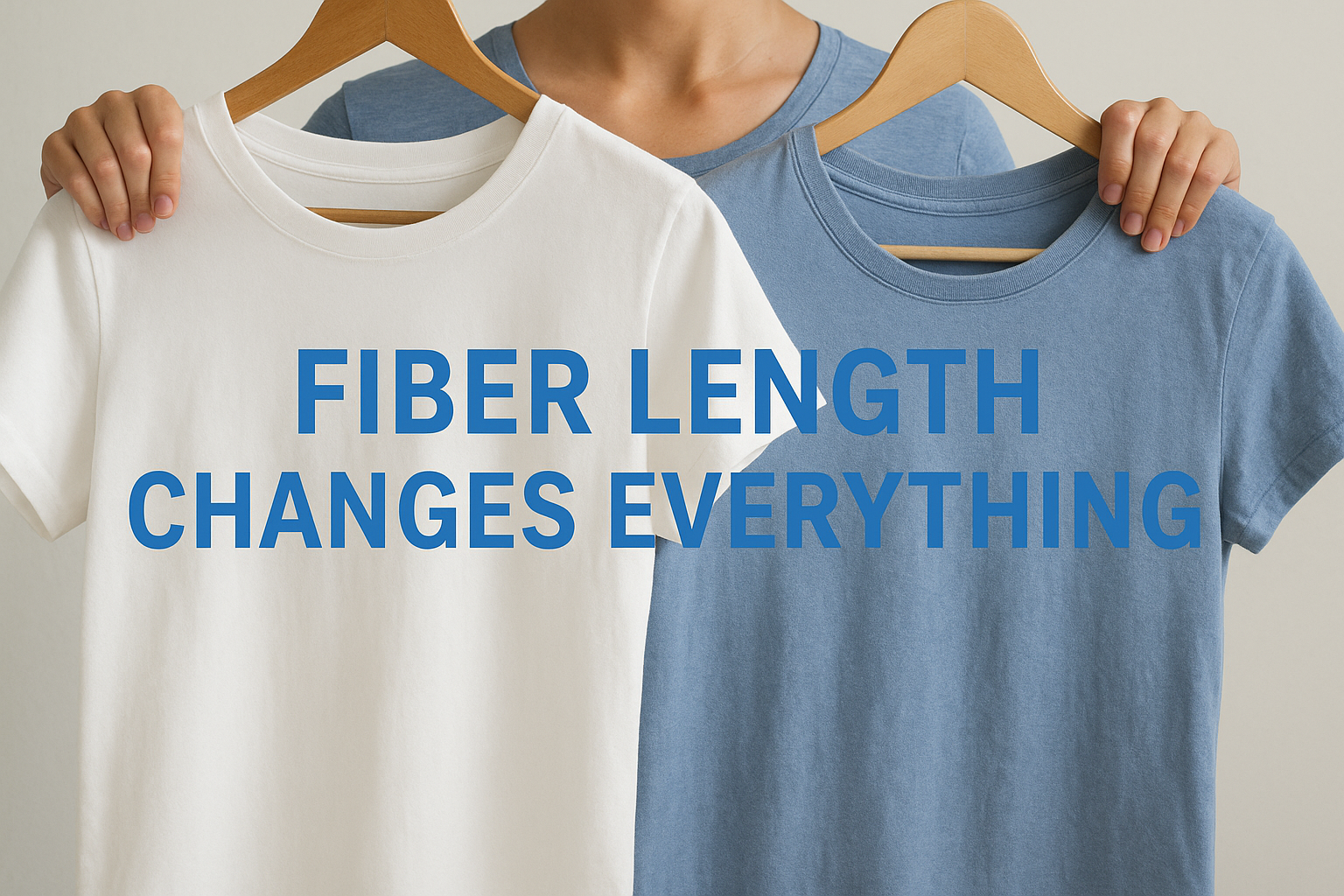
Longer cotton fibers make a stronger, smoother yarn, and that single trait explains almost every advantage Supima has over regular cotton.
Durability you can actually measure
Garment testers rate cotton by tensile strength, and Supima consistently outperforms standard upland cotton and even most Egyptian cotton blends sold at retail. That extra strength matters most in a t-shirt, a garment that gets stretched, tucked, washed, and dried constantly. A women's supima cotton t-shirt built with 300g weight fabric, like the ones SÖMNAD builds its collection around, resists the thinning and translucency that ruins cheaper tees after a season of regular wear.
| Cotton Type | Fiber Length | Typical Feel | Pilling Risk | Lifespan |
|---|---|---|---|---|
| Standard upland cotton | Short | Coarse, gets softer only after wear | High | 1-2 seasons |
| Egyptian cotton (generic) | Medium-long, varies by grower | Soft, inconsistent quality | Moderate | 2-3 seasons |
| Supima cotton | Extra-long, regulated | Smooth and soft from first wear | Low | 3-5+ seasons |
Why the price makes sense long term
Buying a supima cotton t-shirt women's version at $50 to $70 feels steep next to a $12 fast fashion tee, but the math flips once you track cost per wear. A Supima tee that lasts four seasons and gets worn twice a week costs you pennies per wear, while a fast fashion shirt that loses its shape after ten washes needs replacing three or four times over the same period. Sustainability factors into this too: fewer replacements means less textile waste, which matters if you're already trying to buy fewer, better things instead of restocking your closet every few months. Quality here isn't about a logo or a price tag, it's about fiber science holding up to real life.
How to choose the right Supima cotton t-shirt
Not every shirt labeled "Supima" delivers the same quality, since the percentage of Supima fiber in the blend and the weight of the fabric both change how the shirt performs. Some brands use a small percentage of Supima mixed with generic cotton just to slap the name on a hangtag, so you need to check the fabric composition before you check out. A genuine women's supima cotton t-shirt should list 100% Supima cotton, not a blend diluted with polyester or standard upland fibers.
Check the fabric weight first
Weight tells you more about durability than almost any other spec on a product page. Lightweight tees under 180 grams per square meter feel airy but wear thin fast, while heavier fabric in the 280 to 300 gram range holds structure through repeated washing and resists the see-through effect that ruins thin tees. SÖMNAD builds its relaxed tee around 300g Supima cotton specifically because that weight balances softness with the kind of structure that survives daily wear.
A heavier Supima weave isn't stiffer, it's just built to outlast a lighter one.
Match the fit to how you actually dress
A supima cotton t-shirt women's version comes in fits ranging from fitted crew necks to relaxed, boxier cuts meant for layering. Think about your actual wardrobe before choosing:
- Fitted styles work best as standalone pieces or under blazers
- Relaxed, boxy cuts layer better under jackets and pair with looser bottoms
- Longer hemlines suit anyone who tucks shirts regularly
- Crew versus V-neck depends on what you're layering underneath
Read the construction details
Seams matter as much as fabric. Flat-felled or reinforced seams at the shoulders and side panels prevent the puckering and stretching that shows up around the collar after a year of wear. Look for double-stitched hems too, since a single-stitch hem is often the first place a cheaper tee starts unraveling.
How to care for your Supima cotton t-shirt
Even the best fabric fails early if you wash it wrong, and Supima is no exception. The fiber's strength gives you room for error that cheap cotton doesn't, but sloppy laundry habits still shorten the life of a women's supima cotton t-shirt faster than normal wear ever would. Treat washing as part of the investment, not an afterthought, and the shirt will reward you with years instead of months.

Wash cold and skip high heat
Hot water breaks down cotton fibers over time, loosening the tight weave that gives Supima its smoothness. Cold water washing preserves fiber integrity and keeps colors from fading, which matters most on darker basics that show wear first. Dryers cause more damage than washing machines ever do, since high heat shrinks fibers and roughs up the surface until it starts to pill.
Heat is the real enemy of a Supima tee, not the wash cycle itself.
Follow a simple care routine
Stick to these steps and a supima cotton t-shirt women's version will outlast almost anything else in your closet:
- Wash in cold water on a gentle cycle
- Turn the shirt inside out to protect the outer surface from friction
- Skip fabric softener, since it coats fibers and dulls the natural softness
- Air dry flat or on a hanger instead of tumble drying
- Iron on low heat only if needed, and never directly on printed or embroidered areas
Store it properly between wears
Folding beats hanging for knit tees, since hangers stretch the shoulders and neckline out of shape over weeks of storage. Give shirts a little breathing room in the drawer too, since cramming them in creates permanent creases that don't shake out. Storage seems like a small detail, but it's the difference between a shirt that still fits like new after a year and one that's stretched out of shape by month three.
Where to find the best Supima cotton t-shirts
Department store basics sections are the least reliable place to shop for a genuine women's supima cotton t-shirt, since most big retailers stock a handful of Supima styles buried inside racks of standard cotton blends with nearly identical hangtags. You end up reading fine print under fluorescent lighting instead of getting real fabric details, and return policies rarely let you test the shirt through a few wash cycles before deciding if the fit and feel hold up.
Direct-to-consumer brands give you more transparency
Brands built specifically around Supima cotton tend to publish fabric weight, fiber percentage, and construction details right on the product page, which is exactly the information you need before spending $50 or more on a basic tee. SÖMNAD's relaxed tee is built this way, listing the 300g Supima fabric weight upfront instead of hiding behind vague marketing language. Shopping direct also usually means no markup for licensing deals or department store overhead, so more of what you pay goes into the fabric itself rather than the label.
The best place to buy a Supima tee is wherever the brand tells you exactly what's in the fabric, not just what's on the tag.
What to check before you check out
Run through this list on any product page before buying a supima cotton t-shirt women's style, no matter where you're shopping:
- Fabric composition lists 100% Supima cotton, not a blended percentage
- Weight is specified in grams per square meter, ideally 280g or higher
- Return window is long enough to test the fit and run at least one wash
- Customer reviews mention durability after multiple washes, not just first impressions
- Sizing chart includes actual body measurements, not just S/M/L labels
Skipping this checklist is how shoppers end up with a shirt that fits the description but not the fabric it promises.
Finding your perfect Supima tee
A great women's supima cotton t-shirt comes down to three things: real fiber content, honest fabric weight, and construction that survives repeated washing. Skip anything vague about percentages, check the grams per square meter, and read the seams before you read the marketing copy. Once you know what to look for, spotting the difference between a genuine Supima tee and a shirt riding on the name gets a lot easier.
Quality basics shouldn't require guesswork or a return-and-reorder cycle just to find one that holds its shape. That's the whole point of buying fewer, better pieces instead of restocking a drawer full of thinning tees every year. If you want a shirt built on exactly the specs this article covers, 300g Supima cotton, reinforced seams, and a fit made for everyday layering, take a look at SÖMNAD's relaxed tee and see the fabric details for yourself.