


You've probably seen the Lululemon Heavyweight Cotton Jersey T-Shirt all over your feed, and now you're trying to figure out if it actually lives up to the hype before you drop the cash. A heavyweight cotton jersey t shirt isn't just marketing language. It refers to a specific fabric weight and knit structure that changes how a shirt drapes, holds its shape, and wears over months of use. That distinction matters more than most product pages let on.
Here's the short answer: heavyweight jersey cotton, usually in the 200 to 300 gram per square meter range, gives you a tee with real structure, a fuller fabric hand feel, and none of the see-through thinness you get from standard 150gsm shirts. Whether the Lululemon version specifically earns its price tag depends on fit, cotton quality, and how it holds up in the wash.
In this article, we'll break down what makes a heavyweight cotton jersey t-shirt different from a basic tee, look at the fabric and construction details worth checking, and help you decide if it's worth the investment or if there's a better option for your wardrobe.
Why heavyweight cotton jersey matters for everyday wear
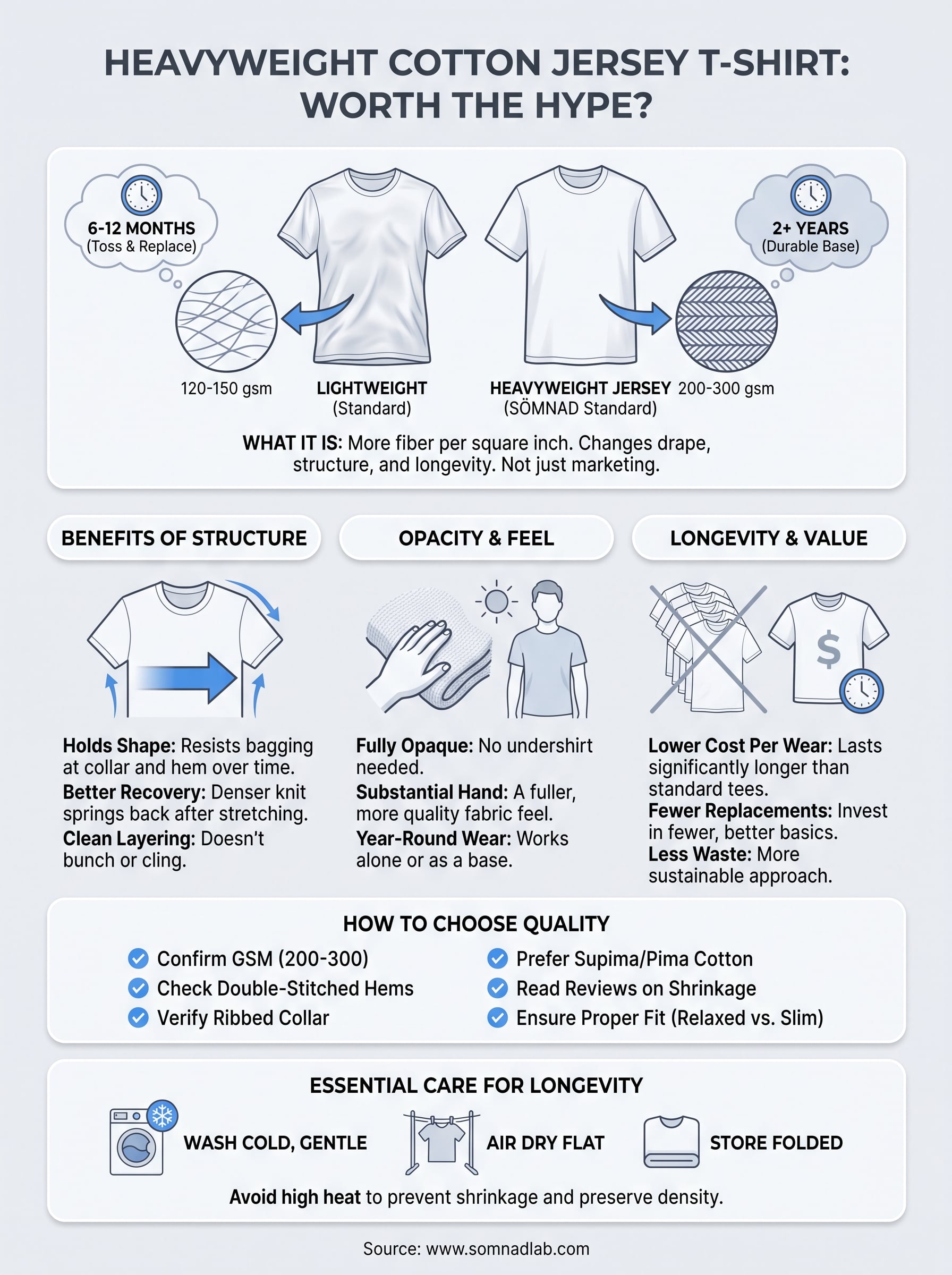
Weight is the single biggest factor that separates a tee you wear once and toss from one you reach for every week. A heavyweight cotton jersey t-shirt sits in the 200 to 300 gsm range, which means more fiber packed into every square inch of fabric. That density changes everything about how the shirt behaves on your body, not just how it feels off the rack. Thin shirts stretch out at the collar within a month; heavier jersey resists that kind of distortion because there's simply more material holding the knit structure together.
Structure that survives repeated wear
Grab a lightweight tee and a heavyweight one side by side and you'll notice the difference immediately. Standard 150gsm cotton tends to go sheer under bright light and loses its shape after a handful of washes. Heavier jersey keeps its drape and structure wash after wash, which is why brands built around durability, including our own approach at SÖMNAD with a 300g Supima cotton tee, lean into higher fabric weights rather than cutting costs with thinner material.
The heavier the jersey, the longer the shirt holds its shape, and that's the whole point of paying more upfront.
Comparing common fabric weights
Here's how the categories typically break down:
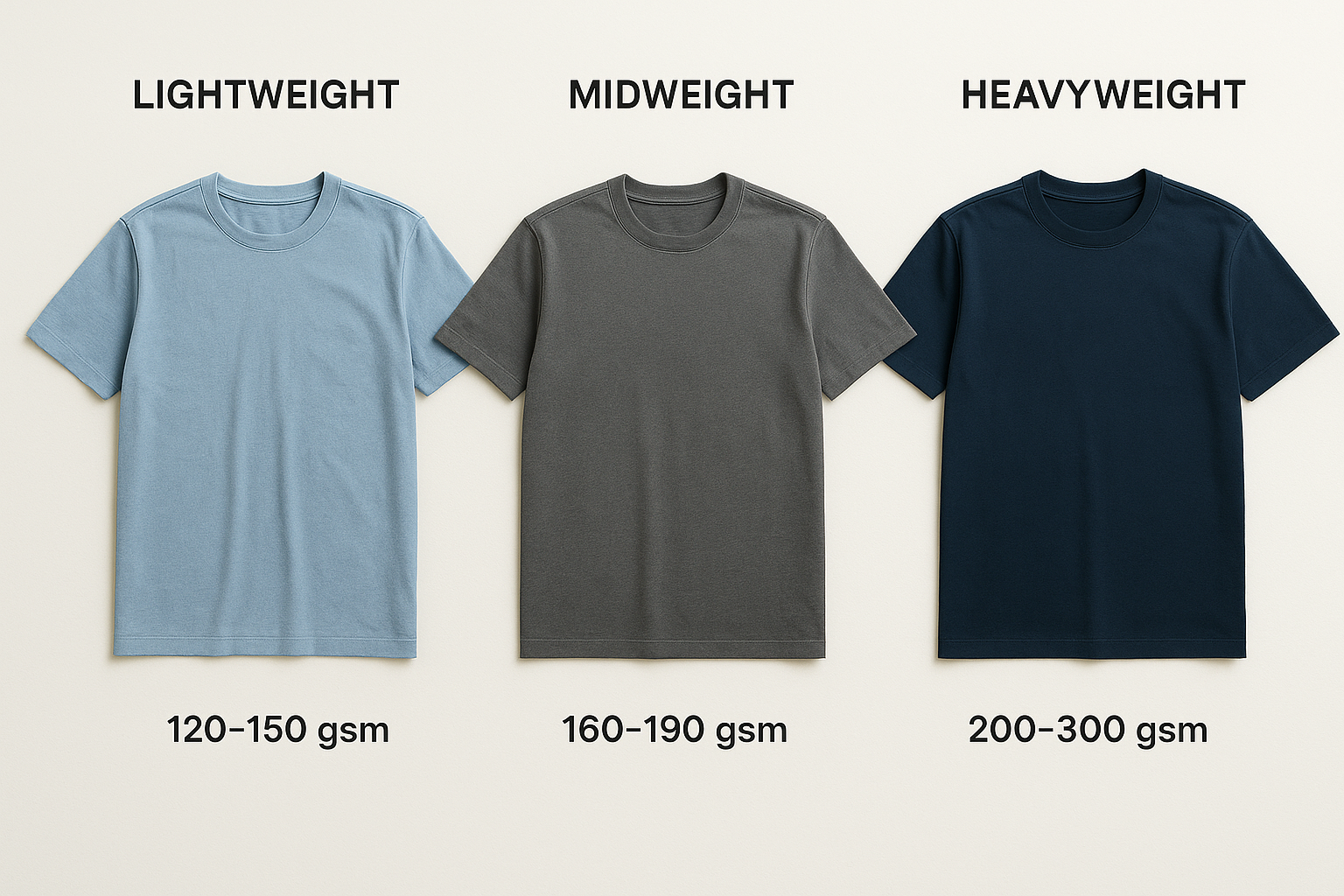
| Fabric Weight | Feel | Typical Lifespan |
|---|---|---|
| Lightweight (120-150 gsm) | Thin, breathable, prone to sheerness | 6-12 months of regular wear |
| Midweight (160-190 gsm) | Balanced, moderate structure | 1-2 years |
| Heavyweight (200-300 gsm) | Substantial, structured, opaque | 2+ years with proper care |
Built for layering and year-round use
Opacity matters more than people expect. A heavyweight cotton jersey tee doesn't need an undershirt beneath it, which makes it a cleaner base layer under flannels, jackets, or open button-downs in cooler months. Since the fabric holds its shape rather than clinging or bunching, it also works as a standalone piece in warmer weather without looking sloppy by midday. That versatility, wearing it alone or as a foundation piece, is exactly why heavier jersey has become the standard for anyone building a wardrobe around fewer, better basics instead of a drawer full of shirts that wear out fast.
How to choose a high-quality heavyweight cotton jersey tee
Picking the right tee comes down to reading past the marketing copy and checking the details that actually predict longevity. Not every shirt labeled "heavyweight" hits the 200 gsm mark, so you need to verify the fabric weight yourself rather than trust the hangtag. Supima and pima cotton varieties tend to outperform standard upland cotton because their longer fibers resist pilling and hold color better through repeated washes.
Check the fiber and weave first
Start by looking for the gsm number on the product page. Anything under 180 gsm doesn't qualify as true heavyweight jersey, no matter what the listing claims. A tight, even knit with no visible slubbing usually signals combed or ring-spun cotton, both of which produce a smoother, more durable fabric surface than cheaper carded cotton.
If the product page doesn't list a gsm number, that's usually a sign the brand doesn't want you comparing it to the competition.
Run through a quick quality checklist
- Confirm the gsm falls between 200 and 300
- Look for double-stitched hems and reinforced shoulder seams
- Check that the collar is ribbed, not just folded fabric
- Verify the cotton type (Supima, pima, or organic upland)
- Read reviews specifically mentioning shrinkage after washing
Fit matters as much as fabric
Even the best jersey knit looks off if the cut doesn't match your frame. A relaxed fit works better with heavier fabric since the extra structure already fills out the silhouette, while a slim cut in heavyweight cotton can feel stiff rather than tailored. Try the shirt on before committing, or check a brand's size chart against a tee you already own and love.
How to care for a heavyweight cotton jersey t-shirt
Proper care determines whether your heavyweight cotton jersey t-shirt lasts two years or gives out after twenty washes. Heavier cotton holds more water than lightweight fabric, which means it also shrinks more if you're careless with heat. The good news is that caring for these shirts isn't complicated, it just requires a bit more attention than tossing everything into one load on hot.
Wash cold, skip the heat
Always wash heavyweight jersey in cold water on a gentle cycle. Hot water breaks down the cotton fibers faster and causes the kind of shrinkage that turns a relaxed fit into something two sizes too small. Turn the shirt inside out before washing to protect the outer surface from pilling and fading, especially if you're mixing it with rougher fabrics like denim.
Cold water and low heat aren't optional extras, they're the difference between a shirt that lasts years and one that shrinks after a month.
Drying without shrinkage
Skip the dryer whenever you can. Air drying flat preserves the shirt's shape and keeps the fabric density from compressing over time, which is what gives heavyweight jersey its structure in the first place. If you need the dryer, use low heat and pull the shirt out while it's still slightly damp.
A quick care checklist
- Wash cold, inside out, gentle cycle
- Avoid fabric softener, which breaks down cotton fibers
- Air dry flat or use low heat only
- Iron on medium heat if needed, avoiding printed areas
- Store folded rather than hung to prevent shoulder stretching
Heavyweight jersey vs. standard cotton: what sets it apart
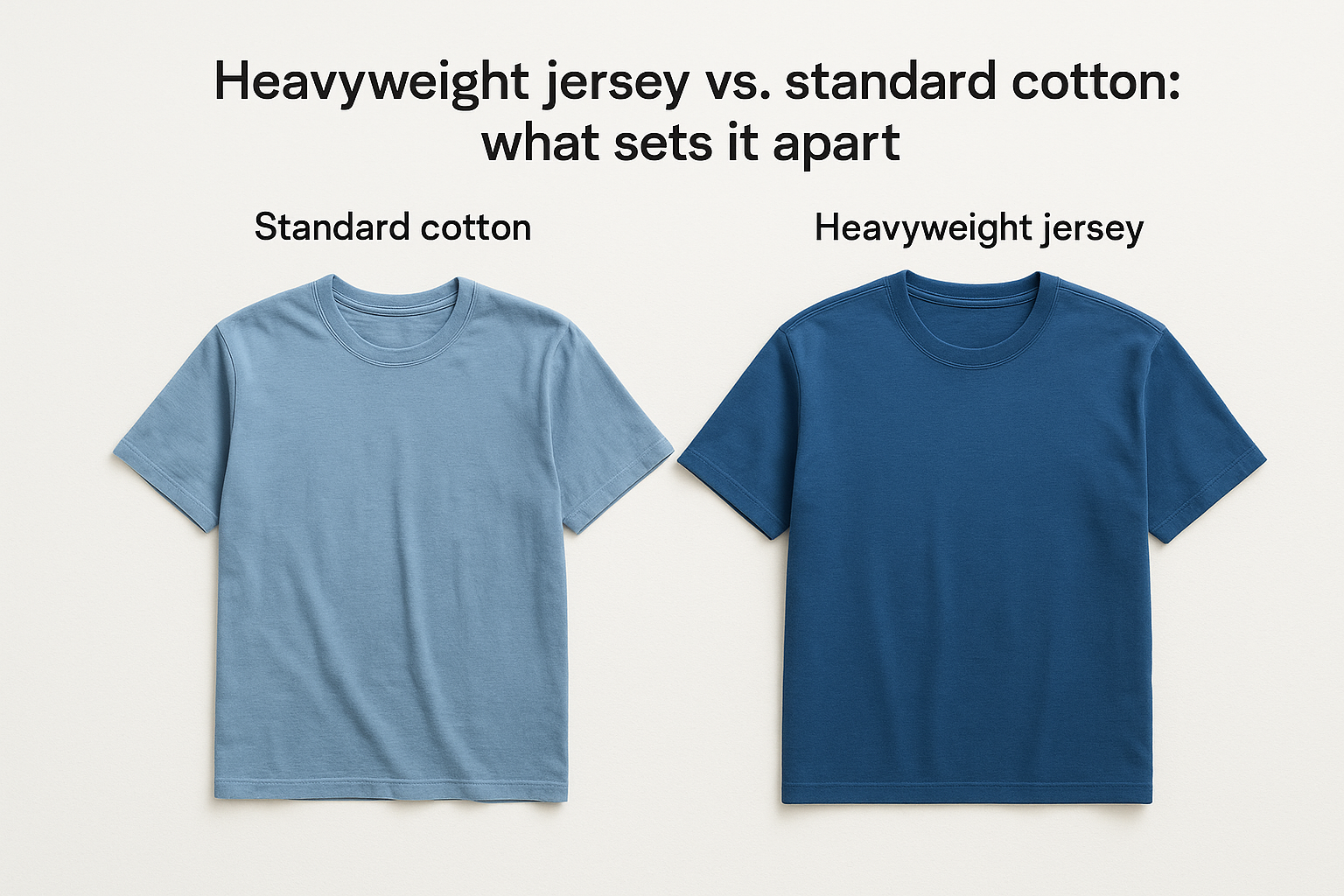
Standard cotton tees usually mean whatever the mill had on hand, a blend of shorter-staple fibers knit into a lightweight, everyday fabric without much thought given to weight or structure. Heavyweight cotton jersey starts from a different premise entirely: the yarn is spun tighter, the knit is denser, and the finished fabric is built to hold a shape rather than just cover skin. That difference shows up the moment you pick up two shirts side by side, one feels like a placeholder and the other feels like a piece of clothing meant to last.
Knit density changes everything
Beyond gsm, the actual knit structure separates these two categories. Standard cotton jersey uses a looser loop structure that allows more stretch and less recovery, which is why cheap tees bag out at the knees of the sleeves and the bottom hem within weeks. Heavyweight jersey packs the loops tighter, so the fabric resists distortion and springs back after stretching across your shoulders or waist.
A denser knit isn't a marketing detail, it's the reason one shirt survives your dryer and another doesn't.
Side-by-side comparison
| Feature | Standard Cotton | Heavyweight Jersey |
|---|---|---|
| Typical weight | 120-160 gsm | 200-300 gsm |
| Opacity | Often sheer | Fully opaque |
| Shape retention | Loses form quickly | Holds shape long-term |
| Cost per wear | Higher over time | Lower over time |
Given this, the price gap at checkout tells you less than the price gap over two years of actual wear.
What to remember before you buy
A heavyweight cotton jersey t-shirt earns its price through fabric density, not branding. Look for a gsm between 200 and 300, confirm the cotton type, and check the stitching before you trust any product page's claims. Care matters just as much as the initial purchase: wash cold, skip the dryer when you can, and you'll get years out of a shirt that would otherwise thin out in months.
Buying one good tee instead of five mediocre ones is the whole philosophy here. Fewer replacements, less waste, better cost per wear over time. That's not a hard case to make once you've felt the difference between 150gsm and 300gsm cotton on your own skin.
If you want a shirt built on that exact standard, see how SÖMNAD's 300g Supima cotton tee holds up before you settle for something thinner.